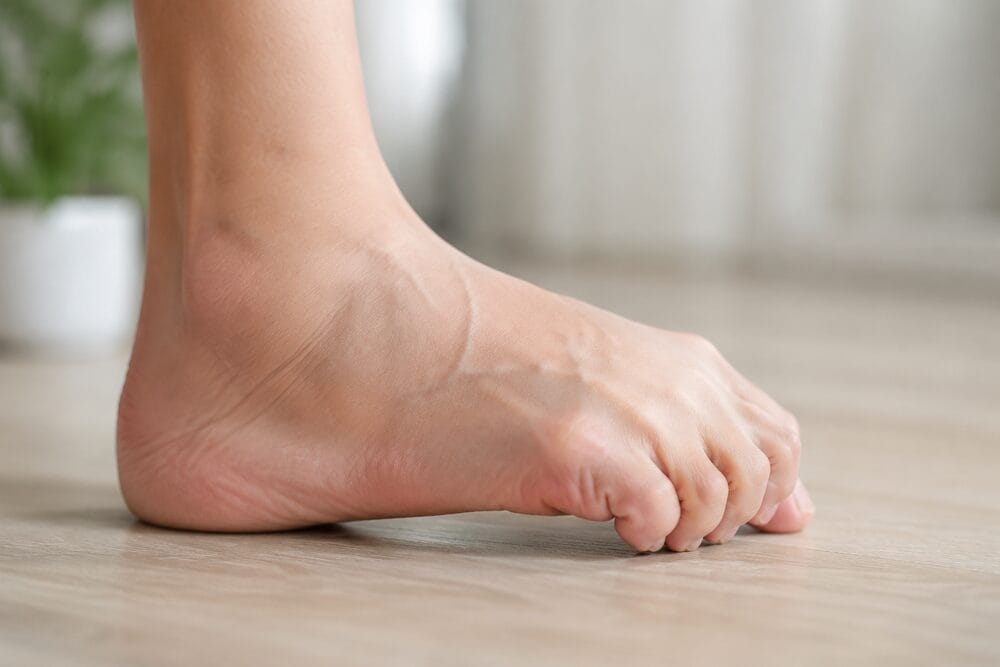

A plantar fascia rupture is a tear in the thick band of tissue that runs along the bottom of your foot. The plantar fascia connects your heel bone to your toes and helps support your foot arch.
This injury can cause pain, swelling, and difficulty with walking. In this guide, Foot + Ankle Specialty Centers will discuss the symptoms, causes, and treatment options.
Table of Contents
ToggleWhat Is a Ruptured Plantar Fascia?
A ruptured plantar fascia happens when the thick band of tissue along the bottom of the foot tears. The tear may be partial or complete. It can happen suddenly during activities such as running or jumping. A rupture can also occur in someone who already has plantar fasciitis, but plantar fasciitis is not always the cause.
A plantar fascia rupture may cause sudden pain in the heel or arch. Some people feel or hear a pop when the injury happens. Swelling, bruising, and trouble putting weight on the foot may also occur. If you already have ongoing heel pain, getting the right diagnosis can help determine if you need plantar fasciitis treatment or care for a plantar fascia tear.
Plantar fascia tear vs rupture
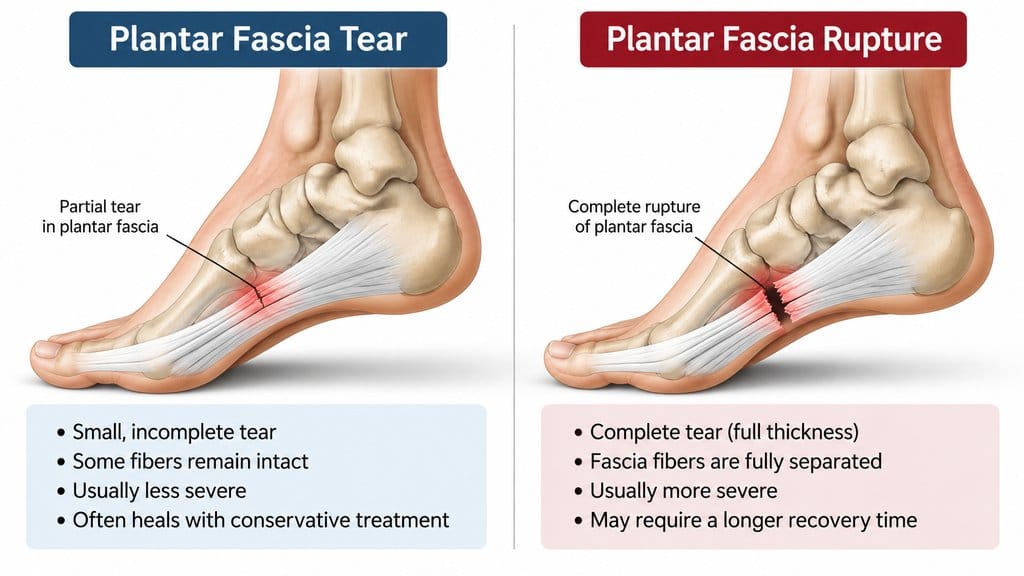
The terms tear and rupture are closely related. A plantar fascia tear can be partial or complete. A rupture usually refers to a more severe or complete tear, although medical sources may sometimes use the terms interchangeably.
Feature | Partial Tear | Complete Tear/Rupture |
Tissue damage | Some fibers are torn | The fascia is completely torn |
Pain | Can range from mild to severe | Often sudden and severe |
Swelling or bruising | May occur | More common |
Walking | May be painful | Often more difficult |
Diagnosis | Ultrasound or MRI may help confirm the tear | Ultrasound or MRI may show a complete rupture |
Treatment | Often includes rest, activity changes, support, and gradual rehabilitation | May require a longer period of protection and rehabilitation; treatment depends on the injury |
What Happens If Plantar Fasciitis Ruptures?
If the plantar fascia ruptures, it may not support the foot arch as well as it normally does. According to a study published in Foot & Ankle International, loss of plantar fascia support may reduce arch height and change how forces are distributed through the foot. However, it does not always cause the arch to collapse.
A plantar fascia rupture should be properly evaluated because the severity of the injury can affect treatment and recovery.
What Are Plantar Fasciitis Rupture Symptoms?

A plantar fascia rupture may cause sudden pain in the heel or arch. Possible plantar fascia rupture symptoms include:
- Sudden, sharp heel or arch pain
- Swelling or bruising under the foot
- Pain when standing or walking
- A popping feeling or sound when the injury happens
These symptoms do not always mean the plantar fascia has ruptured. Other problems, such as a stress fracture, Achilles tendon injury, nerve irritation, or another soft tissue injury, can cause similar symptoms. A proper diagnosis can help find the exact cause.
How Is a Plantar Fascia Rupture Diagnosed?
Diagnosis usually starts with a physical exam. The doctor will ask how and when the pain started and whether you felt or heard a pop. They may look for swelling, bruising, and tenderness in the heel or arch. They may also check your foot movement, arch, and ability to stand or walk.
Imaging is not necessary for every plantar fascia injury. A doctor may order imaging if the cause of the pain is unclear, the injury appears severe, or more information is needed. Here are the main imaging tests that may be used:
Ultrasound
An ultrasound can show the plantar fascia and help identify a partial or complete tear. It can also show changes in the tissue.
MRI
An MRI gives detailed images of the plantar fascia and nearby soft tissues. It may be used when a closer look at the injury is needed.
X-Ray
An X-ray does not directly show the plantar fascia. However, it can help check for a fracture or another bone problem that may cause similar pain.
How Do You Fix a Ruptured Plantar Fascia?
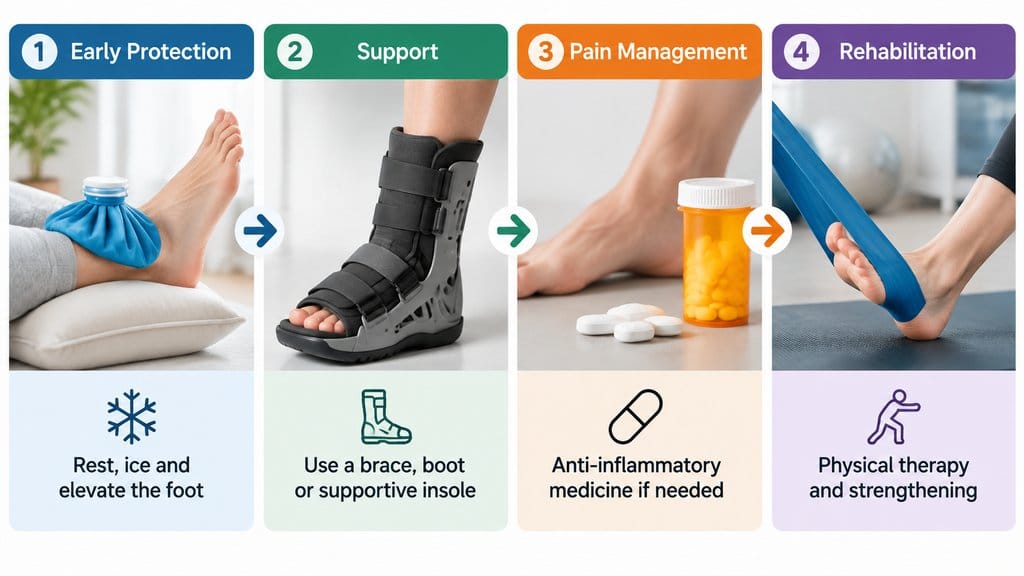
Plantar fascia rupture treatment depends on the severity of the tear and the patient’s needs. Treatment usually starts by protecting the foot and then slowly moves toward rehabilitation and normal activity.
Stage | Treatment | Purpose |
Early protection | Stop painful activities, reduce weight on the foot, apply ice, and keep the foot raised | Reduce pain and swelling and protect the injured fascia |
Support | Wrap the foot with a bandage and use a brace, supportive insole, walking boot, or crutches when needed | Reduce pressure on the fascia and support the arch |
Pain management | Anti-inflammatory medicine may be recommended | Help control pain and inflammation |
Rehabilitation | Physical therapy, stretching, and guided strengthening exercises | Improve foot strength, flexibility, and movement |
Keeping the foot raised may help manage swelling during the early stage of recovery. You can also learn more about general ways to manage foot and ankle swelling in our guide on what to drink to reduce swelling in feet and ankles.
Do not return to normal exercise or sports all at once! Walking and other activities should increase gradually as pain improves and the foot becomes stronger. The right timing varies based on the injury and progress during rehabilitation.
Plantar Fasciitis Rupture Surgery
Surgery is uncommon for a plantar fascia rupture. Most people improve with non-surgical treatment, such as rest, foot support, and physical therapy. In selected cases, surgery may be considered if pain and other symptoms continue despite proper non-surgical care or if the rupture becomes a long-term problem.
The type of surgery depends on the location and severity of the tear and the patient’s individual needs.
Surgery Aftercare
Recovery depends on the type of surgery and the severity of the injury. Your care plan may include:
- Wearing a boot or other supportive device to protect the foot
- Limiting weight on the foot while it heals
- Slowly returning to walking and normal activities
- Starting physical therapy to improve strength, flexibility, and movement
Your doctor will decide when it is safe to increase activity based on how well your foot is healing.
Plantar Fasciitis Rupture Recovery Time
Plantar fascia rupture recovery time is different for everyone. A systematic review of 155 patients found that most plantar fascia ruptures were treated without surgery and generally had good outcomes.
However, there is no standard torn plantar fascia recovery time that applies to every patient. Healing can vary based on the type and severity of the tear, symptoms, treatment, activity level, and individual recovery. Your doctor can tell you when it is safe to slowly return to normal activities.
How Are Plantar Fascia Ruptures in Athletes?
Athletes who run, jump, or make quick movements can put repeated stress on the plantar fascia. A plantar rupture may happen suddenly during activity, especially when the tissue is under heavy strain.
Athletes can help protect their feet by:
- Warming up before exercise
- Increasing training intensity gradually
- Wearing supportive, well-fitting shoes
- Doing foot and calf strengthening exercises
- Taking time to recover from foot pain or injury
- Avoiding a sudden return to high-impact sports after an injury
When Should You Seek Medical Care?
If you think you may have injured your plantar fascia, it is best to have your foot checked rather than trying to diagnose the injury yourself. Early evaluation can help identify the problem and guide the right treatment.
Seek urgent medical care if:
- Your foot looks deformed
- You lose feeling in your foot
- Your foot changes color
- You have an open wound
These problems may be signs of a more serious injury that needs immediate care.
Conclusion
A plantar fasciitis rupture is a painful situation that can have long-term consequences if not treated properly. For a full recovery, prompt diagnosis and appropriate treatment are essential . From non-surgical options to surgery for more severe cases, the right care will get you back on your feet sooner rather than later.
FAQs
Rest your foot and apply ice to reduce swelling. Physical therapy and using orthotics can also speed up healing. In some cases, a podiatrist may recommend a brace or splint for added support.
Walking with a ruptured fascia can be extremely painful. It’s best to avoid walking or putting weight on the foot until you receive treatment. Rest is crucial for recovery.
It becomes an emergency if you hear a popping sound followed by sharp pain and swelling. These torn plantar fascia symptoms need immediate medical attention.
Yes, untreated or severe cases can lead to a rupture, especially in cases of high-impact activities or prolonged stress on the feet.