
After ingrown toenail removal, a bandage protects your toe as it heals. Keep the first bandage on for 12 to 24 hours unless your podiatrist tells you otherwise. Then, use a clean bandage each day while the area is open or draining. Foot + Ankle Specialty Centers explains how long to keep bandage on after ingrown toenail removal and how to care for your toe during recovery.
Table of Contents
ToggleShould I Bandage an Ingrown Toenail?
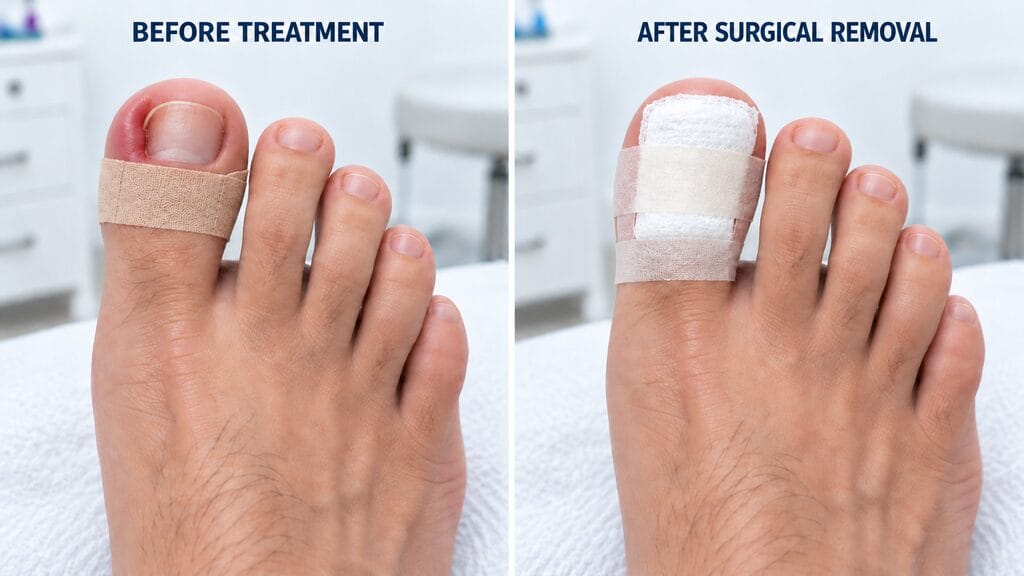
Yes, a bandage can protect an ingrown toenail, but the care you need depends on whether you have had surgery.
Before Treatment
Cover the toe with a clean, loose bandage if the skin is sore, broken, or rubbing against your shoe. This can keep the area clean and reduce irritation. However, a bandage will not correct the ingrown nail.
After Surgical Removal
After ingrown toenail removal, keep the first dressing in place for as long as your podiatrist recommends. When it is time to change it:
- Wash your hands.
- Gently clean and dry the toe as instructed.
- Apply ointment only if your podiatrist recommends it.
- Cover the area with a clean, non-stick bandage.
- Change the bandage if it becomes wet, dirty, or loose.
Avoid tight toe caps or anything that puts pressure on the wound. Always follow the care instructions provided by your podiatrist.
How Long to Keep Toe Covered after Toenail Removal
How long to keep the bandage on after ingrown toenail removal depends on the severity of the surgery. Here are the time ranges for using bandage after ingrown toenail surgery based on the different types of surgeries:
Partial Toenail Removal (Mild Case)
- Keep the bandage on for 24-48 hours after the procedure.
- After that, change the dressing daily until the wound heals.
- Mild cases usually heal in 1-2 weeks, but keep bandaging for the first few days to protect the area.
Full Toenail Removal (Severe Case)
- Leave the bandage on for 48-72 hours to protect the wound.
- Change the dressing daily for 5-7 days, keeping the area clean and dry.
- Full healing takes about 2-3 weeks, but you can stop bandaging when the wound starts to close and scab.
Surgical Removal with Complications
- For more complex cases, follow your doctor’s advice and keep the bandage on for up to a week.
- Change the bandage daily and check for signs of infection, like redness or discharge.
How to Bandage an Ingrown Toenail?
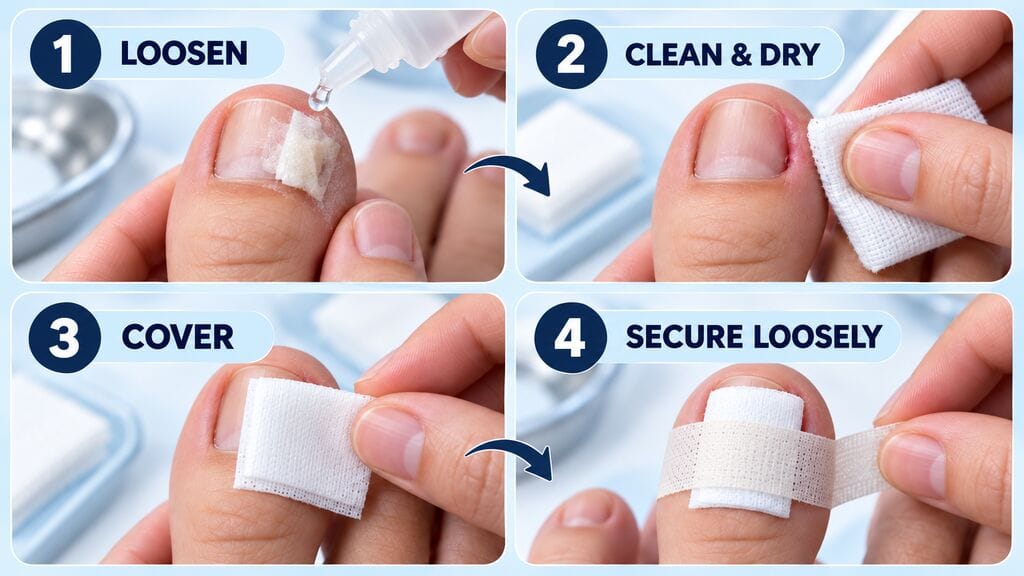
Proper dressing after ingrown toenail removal helps keep the area clean and protected. Follow your podiatrist’s instructions for cleaning and covering the toe.
- Wash your hands before touching the bandage.
- Clean the toe as your podiatrist instructed.
- Gently pat the area dry with clean gauze.
- Apply ointment only if your podiatrist recommends it.
- Place a sterile, non-stick dressing over the area.
- Secure it lightly with medical tape. Do not wrap the toe tightly.
- Change the dressing when instructed or whenever it becomes wet, dirty, or loose.
The bandage should stay in place without feeling tight or causing pressure, numbness, tingling, or a change in toe color. If the old dressing sticks, wet it with saline or clean warm water. Wait for it to loosen, then remove it gently. Do not pull it off.
How Long After Toenail Removal Can I Shower?
Keep the first dressing clean and dry. Your podiatrist will tell you when you can remove it and safely shower. The timing depends on the procedure and your specific aftercare plan.
When you are allowed to shower:
- Protect the dressing from water if it must remain in place.
- Do not remove the dressing early unless instructed.
- Gently pat the toe dry after showering.
- Apply a clean dressing as directed.
- Avoid soaking the toe until your podiatrist says it is safe.
Always follow the instructions from your podiatrist, as care may differ for each procedure.
How Long After Toenail Removal Can I Wear Shoes?
When you can wear shoes depends on your procedure and how your toe is healing. Wear sandals, open-toe shoes, or roomy shoes that do not press or rub against the treated area. Return to closed-toe shoes only when you can wear them without pain or pressure. Tight shoes can irritate the toe and slow healing. Follow your podiatrist’s advice about what shoes to wear after ingrown toenail surgery and when to return to your normal shoes.
Toenail Removal Healing Stages
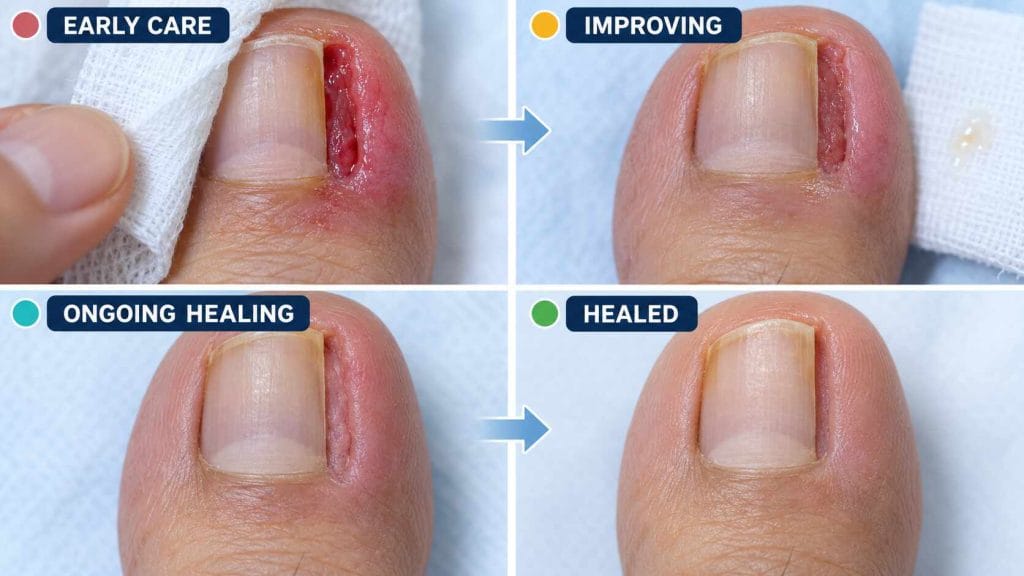
After toenail removal, soreness, swelling, and drainage should slowly improve. These stages provide a general guide to healing:
- At first, the toe may feel sore, tender, or swollen. Keep the first dressing clean and dry as instructed.
- As healing continues, pain and swelling should slowly improve. Change the dressing and clean the toe based on your aftercare plan.
- The area may remain open, moist, or slightly draining for some time. A matrixectomy may cause drainage for longer because part of the nail root was treated.
- You can slowly return to normal shoes and activities when they do not cause pain, pressure, or rubbing.
Not every wound forms a scab or heals within the same number of days. Follow your podiatrist’s instructions and contact the office if pain, redness, swelling, or drainage gets worse.
Normal Healing vs. Possible Infection
Some soreness, mild redness, swelling, or light drainage can be normal after toenail removal. These symptoms should slowly improve as the toe heals. According to the American Academy of Orthopaedic Surgeons, worsening redness, pain, swelling, or pus may be signs of infection.
Learn more about the signs of infection after toenail removal and when to contact your podiatrist.
When to Contact a Podiatrist
Some symptoms may mean your toe needs medical care. Contact a podiatrist if you notice any of the following:
- Redness or swelling that gets worse
- Warmth around the toe
- Thick drainage or a bad smell
- Heavy bleeding that does not stop
- Severe or increasing pain
- A wound that is not healing
- Any new toe problem if you have diabetes or poor circulation and need treatment for diabetic foot problems
If you notice any of these warning signs, schedule an appointment with Foot + Ankle Specialty Centers. Our trusted podiatrists have earned over 1,000 five-star reviews and serve patients in Phoenix, Scottsdale, Chandler, Mesa, and Gilbert, Arizona.
Final Thoughts
Taking care of your toe after ingrown toenail removal is critical to your recovery. Use a bandage, keep it on for the recommended time, and clean the wound daily. Watch for any signs of infection like redness, increased swelling, or discharge. Avoid tight shoes and soaking the toe until it’s fully healed. By following these steps, you can prevent infections and speed up your healing time.
FAQs
Yes, keeping the toenail covered protects it from dirt, bacteria, and injury.
You should wait at least 2-3 days for minor procedures and 1-2 weeks for severe cases before wearing closed-toe shoes.
You can usually stop dressing your toe after 5-7 days but always follow your doctor’s instructions.
Keep your toe covered while it is open, moist, or draining, and follow your podiatrist’s specific aftercare instructions very closely.
Clean the toe as directed, place a sterile non-stick dressing over it, and secure it with medical tape without wrapping tightly.
Stop wearing bandages when the area is dry, closed, and no longer draining, unless your podiatrist advises otherwise during healing.