
Numbness in feet means you feel less than usual or lose feeling in part of your foot. Tingling may feel like pins and needles. These symptoms can happen due to pressure on nerves, diabetes, poor blood flow, or low vitamin levels. Understanding the cause can help you find the right care and feel more comfortable. In this guide, Foot + Ankle Specialty Centers covers common causes, symptoms, and treatment options.
Table of Contents
ToggleIs Foot Numbness Dangerous?
Foot numbness can range from a brief, harmless problem to a sign of a serious condition. The level of danger depends on the cause. Numbness from pressure on a nerve usually carries little risk if feeling returns soon after you change position.
Numbness that lasts or returns often needs more attention. It may point to nerve damage or another health problem. Reduced feeling can also hide cuts, burns, and blisters, which may lead to wounds or infections, especially in people with diabetes.
According to Mayo Clinic, some cases need emergency care because they may signal a stroke or severe nerve compression. A medical check can help identify the cause and how serious it is.
Why Are My Feet Numb?
According to MedlinePlus, nerve pressure, poor blood flow, diabetes, injuries, and low vitamin levels can cause foot numbness. Here are common numb feet causes and who may be more at risk:
Cause | How it affects your feet | Who is more at risk |
Pressure on nerves | Crossed legs or tight shoes press on nerves and cause temporary numbness. | People who stay in cramped positions or wear tight shoes |
Diabetes | High blood sugar damages nerves over time. Regular diabetic foot care helps detect foot problems early. | People with long-term diabetes or poorly controlled blood sugar |
Poor blood flow | Narrow arteries reduce blood flow and may cause numbness, cold feet, pain, or skin discoloration on feet. | People who smoke or have diabetes, high cholesterol, or high blood pressure |
Injuries | Foot, ankle, or lower back injuries can damage or press on nerves. | People with sports injuries, past accidents, or back problems |
Low vitamin B12 | Too little B12 can harm nerves and reduce feeling in the feet. | Older adults, vegans without B12 supplements, and people with poor nutrient absorption |
Other health conditions | Rheumatoid arthritis may press on nerves. Multiple sclerosis disrupts nerve signals. | People with these conditions |
Numbness in One Foot vs. Both Feet
Numbness in one foot may come from pressure on a nerve in your foot, ankle, or lower back. Tight shoes, an injury, or a trapped nerve can cause this. Numbness in both feet may point to a condition that affects several nerves, such as diabetes or low vitamin B12. It often starts in the toes and may spread over time.
According to MedlinePlus, nerve damage can affect one nerve or many nerves. The location helps your doctor find the cause, but it does not confirm a diagnosis. See a doctor if numbness lasts or returns often.
Temporary vs. Persistent Numbness in Feet
Temporary numbness often clears after you change position or remove tight shoes. Persistent numbness stays or does not fully go away. Numbness that returns often also deserves a medical check. Here are the main differences between temporary and persistent numbness:
What to compare | Temporary numbness | Persistent numbness |
How it feels | Brief loss of feeling or pins and needles | Reduced feeling that stays |
Possible causes | Pressure from crossed legs, posture, or tight shoes | Nerve damage, diabetes, low B12, or poor blood flow |
What happens next | Feeling often returns after you remove the pressure | Symptoms continue despite a change in position |
What to do | Change position or loosen tight shoes | See a doctor to find the cause |
What are Symptoms of Feet Numbness?
Numbness can affect one foot or both. It may come and go or last longer, depending on the cause. Common symptoms include these changes:
- Tingling feels like pins and needles or small prickles in your foot.
- Burning feels like heat or a sting, even when your skin is not hot.
- Reduced sensation makes touch, pressure, or temperature harder to feel. You may not notice a small cut or blister.
- Loss of feeling means you cannot feel part of your foot at all.
- Trouble with balance or walking can happen when you cannot feel the ground clearly. You may feel unsteady or stumble.
Contact your doctor if numbness lasts, returns often, or gets worse. Seek urgent medical care if it starts suddenly with weakness or new balance problems.
How to Stop Numbness in Legs and Feet?
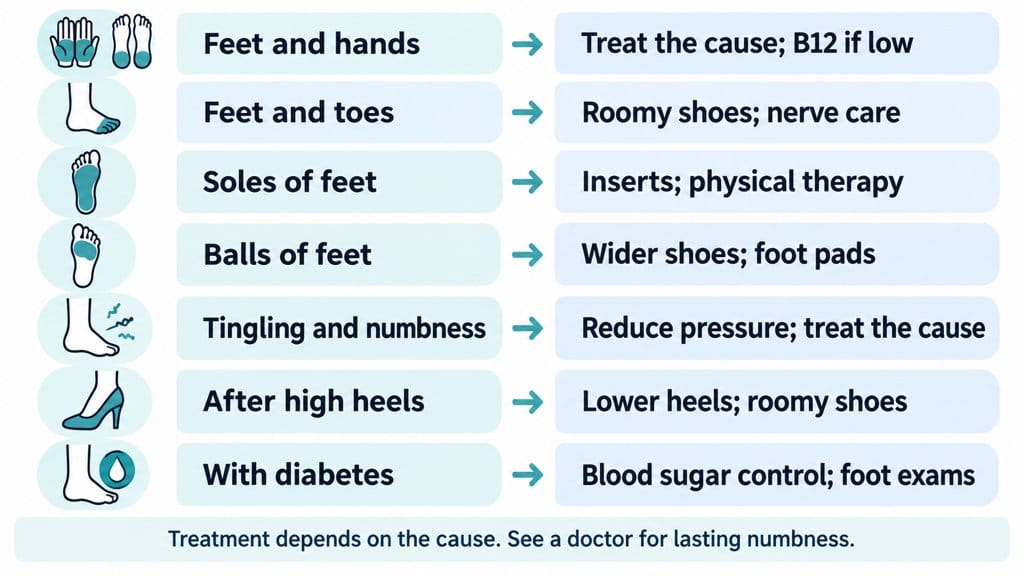
Foot numbness can feel different from person to person. It may affect your toes, the bottom of your feet, or both your feet and hands. Where you feel it and when it happens can help your doctor understand the cause and choose the right care.
According to MedlinePlus, possible causes include pressure on nerves, nerve damage, poor blood flow, and low vitamin levels. Below, we explain common patterns of numbness and treatments that may help.
Numbness in Feet and Hands
Numbness in both your feet and hands may point to a problem that affects several nerves. Diabetes and low vitamin B12 are possible causes. A doctor may check your blood sugar, vitamin levels, and nerve function.
Here are the treatments that may help:
- Blood sugar control helps limit further damage from diabetes.
- B12 tablets or injections help if tests confirm a shortage.
- Other nerve conditions need treatment that matches the diagnosis.
Numbness in Toes and Feet
Tight shoes can press on nerves and make your toes feel numb. A trapped nerve or nerve damage in feet may also cause symptoms that last. Here are steps that may help:
- Switch to shoes with more toe room.
- Your doctor may recommend inserts or physical therapy for certain nerve problems.
- Persistent numbness needs a medical check to find the cause.
Numbness in Soles of Feet
Numbness under your foot may come from nerve damage or a trapped nerve near your ankle. One example is tarsal tunnel syndrome. Here are treatment options that may help:
- Shoe changes or suitable inserts may reduce pressure.
- Physical therapy may help with some causes of nerve pressure.
- Severe, confirmed nerve compression may need surgery.
Numbness in Ball of Foot
Pressure on nerves in the front of your foot may cause numbness near the toes. Morton’s neuroma can also cause pain or a pebble-like feeling in this area. Here are ways to help ease the numbness:
- Wear wider shoes with low heels.
- A properly placed foot pad may reduce pressure.
- A specialist may recommend injections or surgery if other care does not help.
Numbness and Tingling in Feet
Pins and needles with reduced feeling may occur when a nerve is under pressure or damaged. Symptoms that last or return often need an exam. Here are care options that may help:
- Change position if brief nerve pressure causes the symptoms.
- Treat the underlying cause, such as diabetes or low B12.
- Prescription medicine may ease nerve pain, but it does not restore lost feeling.
Numbness in Feet After High Heels
High heels place extra pressure on the front of your feet. Tight toe boxes can squeeze nerves and cause temporary numbness. Here are some options to help you feel more comfortable:
- Remove the heels and switch to roomy, supportive shoes.
- Choose lower heels to reduce pressure.
- See a doctor if feeling does not return or symptoms recur.
Diabetes and Numbness in Feet
Diabetes can damage nerves and reduce feeling in your feet. If blood sugar stays too high, it can also increase the risk of poor blood flow, slow-healing wounds, and diabetic itchy feet.
- Here are steps that can help protect your feet.
- Keep blood sugar within the target range your doctor sets.
- Check your feet daily and have regular foot exams.
- Ask your doctor about medicine if you also have nerve pain.
When Should I Worry About Foot Numbness?
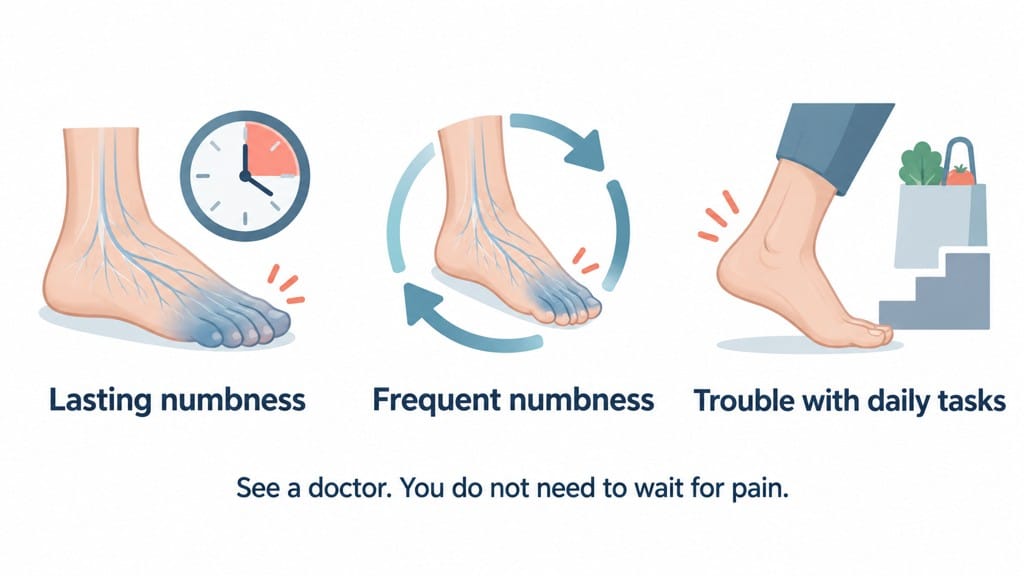
Foot numbness deserves a medical check if it lasts, returns often, or affects your daily life. According to Mayo Clinic, persistent numbness may point to an underlying problem that needs care. You do not need to wait until it becomes painful.
Get care for your feet at Foot + Ankle Specialty Centers, with over 1,000 reviews and five Arizona locations. Our team can help find the cause and recommend the right treatment. Call 480-812-3668 to book your appointment today.
What is the Best Medicine for Numbness in Feet?
There is no single best medicine for foot numbness. The right choice depends on the cause. According to the NHS, medicines such as gabapentin, pregabalin, duloxetine, or amitriptyline may ease nerve pain that comes with numbness. They do not restore lost feeling. Your doctor can decide whether you need medicine after an exam.
Conclusion
Foot numbness can be caused by anything from nerve pressure to conditions like diabetes. While not always serious, persistent or painful numbness should be checked. Addressing it early can help prevent further issues! If you’re experiencing foot numbness, contact a foot specialist for the right treatment and to get back on your feet.
FAQs
A lack of vitamin B12 can cause nerve damage, leading to numbness in the feet.
If the numbness lasts for a long time, is paired with pain, or affects your balance, it might be serious. Consult a doctor if symptoms don’t improve.
Yes! Walking can help improve circulation and reduce numbness, but be careful not to overdo it if you’re already in discomfort.
Long-term numbness could signal nerve damage or poor circulation. If left untreated, it may lead to more severe complications.
Numbness in the feet can happen from nerve compression, poor circulation, diabetes, injuries, or vitamin deficiencies. If it’s frequent, get it checked out!