
Can Nail Polish Cause Fungus?
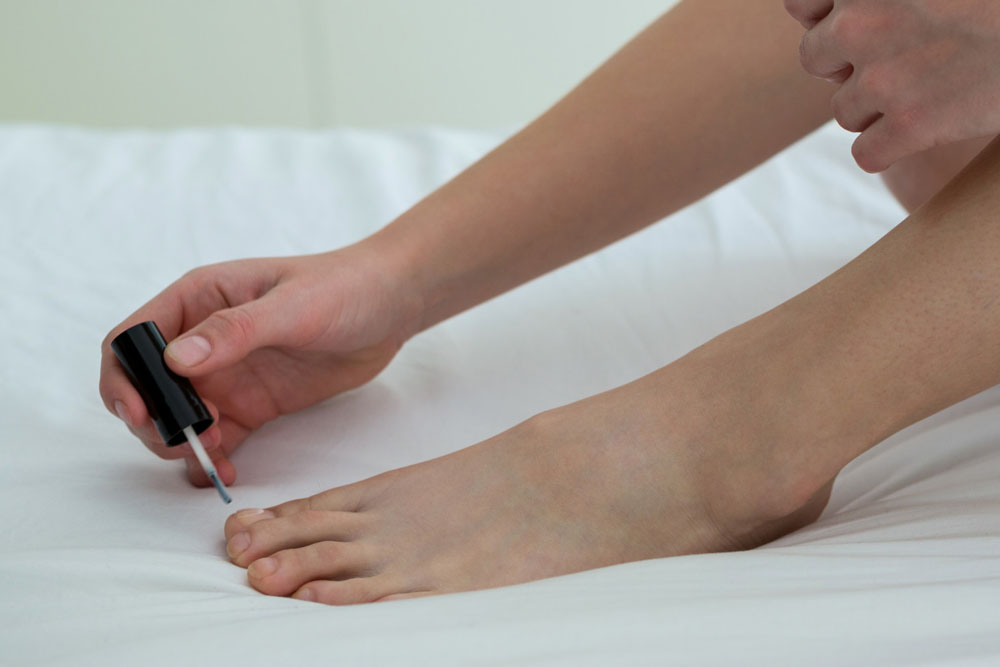
If you just noticed a strange mark under your polish, you are probably wondering if the polish itself is to blame. Many people, especially nail salon goers, ask themselves, “Can nail polish cause fungus?” No, nail polish does not create or cause a fungal infection on its own, but it can spread one, trap one, or make an existing one worse.
How Can Nail Polish Cause Toenail Fungus?
Toenail fungus, also called onychomycosis, starts when fungi enter the nail through a tiny crack or cut in the skin around it. If you already have an infection, it helps to know your nail fungus treatment options as you read on.
Fungi spread in a few common ways. You can pick them up when you touch the skin or nails of someone who has them, share items like an unwashed towel or nail clippers, or walk barefoot in a warm, damp place such as a pool deck or locker room (American Academy of Dermatology). A fungal skin infection like athlete’s foot can also spread into a nearby nail. Once fungus takes hold, it usually needs treatment and rarely clears up on its own.
Now let’s look at how nail polish can lead to toenail fungus:
Trapped Moisture
Applying polish over an infection seals the surface of the nail. If moisture gets trapped underneath, especially when gel polish is left on for several weeks, it creates a warm, damp space where fungus grows more easily. This is one of the simplest ways nail fungus caused by nail polish gets started, even though the polish itself is not a fungus.
Cross-Contamination
Using a polish brush on an infected nail and putting it back in the bottle can spread fungal spores to the next person. A 2020 study tested this with Trichophyton rubrum, the fungus behind most nail infections (Anais Brasileiros de Dermatologia). Colored polish and base coat killed the fungus every time. The top coat still had live fungus 60 days later. So sharing a top coat is the real risk, not sharing color.
Here is what that same testing found about what actually carries risk in a manicure or pedicure kit:
- Colored polish did not carry live fungus after contamination testing.
- The base coat did not carry live fungus after contamination testing.
- The top coat carried live fungus for at least 60 days after contamination.
- Shared files, clippers, and other tools can carry fungus too if they are not sanitized between uses.

Masking Symptoms
Dark or opaque nail polish can hide early discoloration or thickening, so a mild infection can get worse underneath without you noticing. Choosing a sheer polish now and then, or leaving your nails bare periodically, makes it easier to catch changes early. This masking effect does not cause fungus on its own, but it can let an existing infection go unnoticed for longer.
Lifting Nails (Onycholysis)
Leaving gel polish on for too long, or removing it too roughly by soaking, peeling, or filing, can cause the nail to lift slightly away from the nail bed. This is called onycholysis (Cleveland Clinic), and it can happen on toenails as well as fingernails. Onycholysis is not a fungal infection by itself, but the gap it creates traps moisture and gives fungi an easy way in, which is one of the ways nail fungus from gel polish gets started.
A fungal infection can also cause a nail to lift in the first place, so the two problems can feed into each other. A nail that looks gray, white, yellow, or green where it has lifted is worth having checked by a specialist.

Signs You Might Have Nail Fungus from Nail Polish
Can you get nail fungus from nail polish? Yes, it can happen, mainly through trapped moisture, contaminated tools, or a shared top coat, not from the polish itself.
Early signs are easy to miss if you wear polish often, so it helps to know what to watch for (Mayo Clinic):
- A white or yellow patch under the nail
- A change in texture, such as thickness, brittleness, or crumbling
- Nail color that stays dark even after you remove the polish
- Discomfort, pressure, or an odor around the nail
If you notice any of these changes, remove the polish and have a specialist take a look. Starting treatment early for toenail fungus caused by nail polish usually leads to better results.
How to Protect Your Nails
All you need is a few simple habits to learn how to prevent nail fungus from nail polish:
Give Nails a Break
Leave your nails bare for stretches of time between manicures or pedicures so they can dry out fully and recover. This is also when early changes are easiest to spot.
Don’t Polish an Infection
Avoid putting polish over a nail you suspect has a fungal infection. It traps the problem underneath and hides how it is progressing. See a podiatrist for a proper look before deciding whether to polish.
Avoid Sharing
Never share nail polish bottles, files, or clippers with anyone else. As the testing above showed, a shared top coat is one of the easiest ways fungus spreads from one person to another.
Sanitize Tools
Clean and disinfect pedicure and manicure tools after every single use. Real sanitizing means metal tools that go through an autoclave and single-use files and buffers, not just a quick wipe-down. If you do your own nails at home, the same rule applies to your own tools.
Dryness vs. Fungus: Keratin Granulations
Leaving polish on too long, or using a harsh, acetone-based remover, can dry out the nail and cause harmless white, chalky patches called keratin granulations (Harvard Health). They’re often mistaken for fungus, but they aren’t the same thing. Keratin granulations sit on the surface and usually grow out or polish away. A true fungal infection, including white superficial onychomycosis, tends to persist, spread, or bring thickening instead of fading.
Keratin granulations show up mostly on fingernails, but the same pattern can happen on toenails too. If you’re not sure which one you have, a podiatrist can tell the two apart in a single visit.
If you’re wondering whether that same acetone does anything to an actual infection, we cover acetone and nail health in more detail separately.
Does Gel Nail Polish Cause Fungus?
You may ask yourself: Can gel polish cause toenail fungus? No, it cannot on its own, but people typically wear it for 2 to 3 weeks at a time, which makes it riskier than regular polish simply because it stays on longer. That extra time extends the trapped moisture window described above. Removal is often the bigger issue: gel usually needs soaking, peeling, or filing, and that process can thin or damage the nail, leaving it more vulnerable to infection afterward.
Can Old Nail Polish Cause Fungus?
Whether an old bottle is a problem depends on the product and how it has been used, not just its age. A bottle of color or base coat that has sat untouched in a drawer is low risk. A top coat that has been shared or exposed to an infected nail is the more realistic concern. The next section explains exactly how long fungus can survive in each type of polish.
How Long Can Fungus Live in Nail Polish?
A 2020 study tested this with real numbers. Researchers put fungus on red polish, white polish, base coat, and top coat, then checked each one right away, at 72 hours, and again at 60 days (Anais Brasileiros de Dermatologia). The color and base coat killed the fungus every time. The top coat still had live fungus after 60 days, the last day tested. So the top coat is the one to be careful with, not the color.
Should You Go to the Nail Salon at All?
Yes, for most people, a nail salon is still a normal, low-risk choice as long as basic hygiene is followed. Look for metal tools that go through an autoclave, single-use files and buffers, and foot baths with liners that are changed between clients. Bringing your own tools is always an option if you want extra peace of mind.
A 2025 study tested 67 applicators from antifungal nail polish bottles used by real patients being treated for nail fungus and found zero fungal growth on any of them, thanks to the polish’s own antifungal properties (Skin Appendage Disorders, 2025). That’s a good sign for antifungal polish specifically, and it’s still worth choosing a salon that sanitizes properly either way.
Treating Nail Fungus: What Are Your Options?
Can nail polish cause fungus? No, not on its own, but if you’re noticing changes under your polish or just have questions, it’s worth getting a clear answer from a specialist.
At Foot + Ankle Specialty Centers, our treatment options go beyond over-the-counter creams and polishes. We offer prescription topical and oral medications, as well as in-office procedures for infections that haven’t responded to home care. Your care is led by Dr. Payam Sarraf, DPM, who graduated magna cum laude with bachelor’s degrees in microbiology and molecular genetics from UCLA and completed additional clinical training at Madigan Army Medical Center during his final year of podiatric school.
We see patients across Phoenix, Chandler, Mesa, Scottsdale, and Gilbert, so help is close by no matter where you are.
Ready for answers? Call us at 480-812-3668 to schedule an appointment and get the right treatment plan for your nails.
FAQs