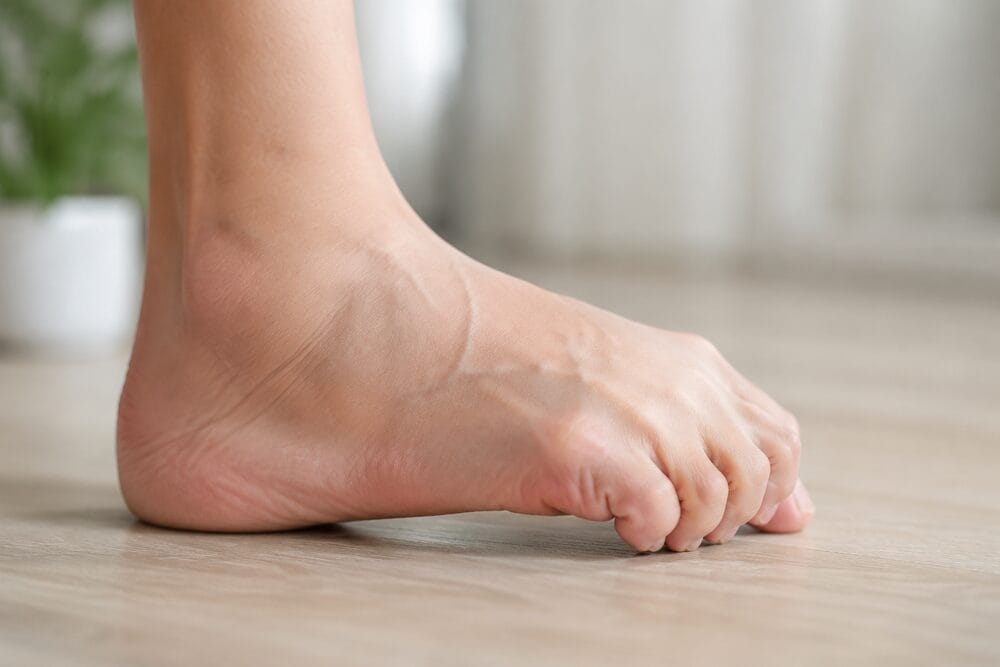
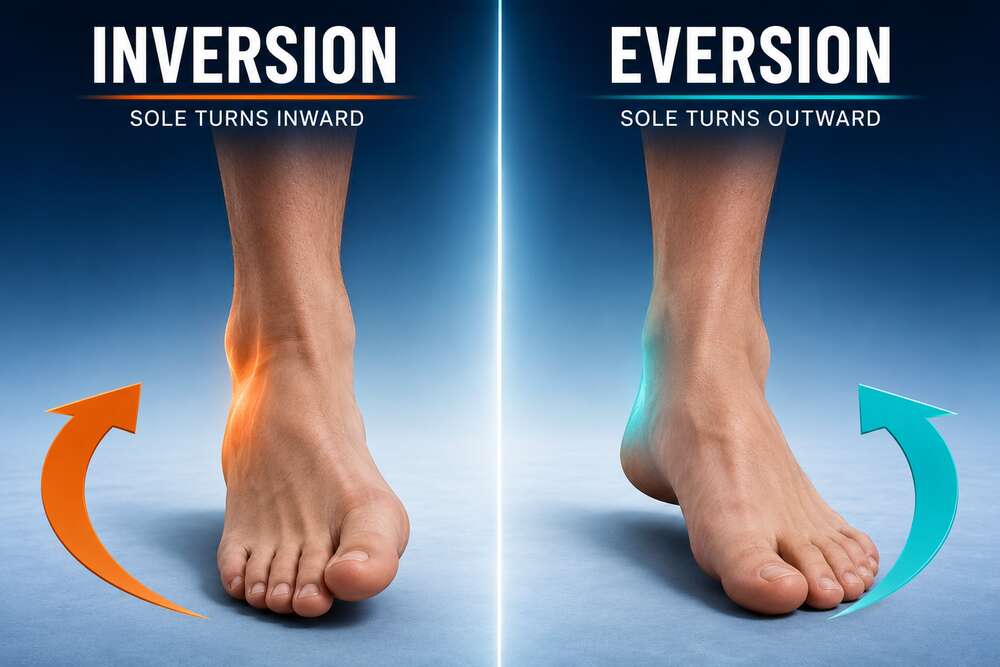
Inversion and eversion are two normal movements of the foot. Inversion turns the sole of the foot inward. Eversion turns the sole outward. Your feet use both movements when you walk, run, balance, or move across uneven ground. However, a sudden or forceful movement can injure the ankle. In this guide, Foot + Ankle Specialty Centers explains the differences between inversion vs. eversion of the foot, their common injuries, symptoms, and treatments.
Table of Contents
ToggleWhat Is Foot Inversion?
Foot inversion, also called ankle inversion, happens when the bottom of your foot turns inward toward your other foot. The inner edge lifts while the outer edge moves down. The tibialis anterior and tibialis posterior muscles control most of this movement. Together with ankle eversion, this movement supports a healthy foot range of motion when you walk.
A sudden inward roll can stretch or tear the ligaments on the outside of the ankle. This inversion ankle sprain, also called a lateral ankle sprain, may happen when you step off a curb or land badly after a jump. It is the most common type of ankle sprain.
What Is Foot Eversion?
Foot eversion happens when the sole of your foot turns outward, away from your other foot. The inside edge moves down while the outside edge lifts. The fibularis muscles mainly control eversion. These muscles are also called the peroneal muscles. They run along the outside of your lower leg and help keep your ankle stable.
A small amount of eversion is part of normal walking. However, forceful eversion can injure the ligaments on the inside of the ankle. These strong ligaments are known as the deltoid ligament.
An eversion ankle injury is less common than an inversion injury. This is because the inner ankle ligaments are strong and the ankle has a smaller range of eversion.
Key Differences Between Foot Inversion and Eversion
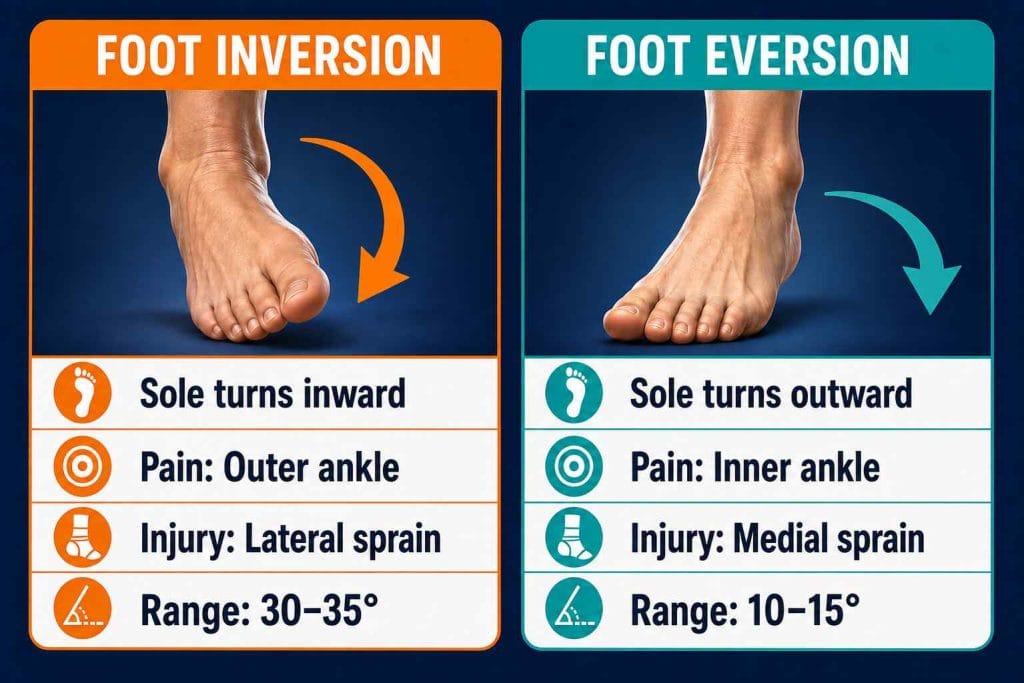
Foot inversion and eversion can lead to different symptoms and may have different causes. Their normal range of motion is also different. Below, we explain these differences and how foot and ankle problems are diagnosed and treated.
| Difference | Foot Inversion | Foot Eversion |
| Direction | Sole turns inward | Sole turns outward |
| Edge that lifts | Inner edge | Outer edge |
| Main muscles | Tibialis anterior and posterior | Fibularis, or peroneal, muscles |
| Normal movement range | Greater | Smaller |
| Pain after an injury | Outside of the ankle | Inside of the ankle |
| Ligaments often injured | Outer ankle ligaments | Inner deltoid ligament |
| Related injury | Lateral ankle sprain | Medial ankle sprain |
| How common it is | More common | Less common |
Symptoms
An inversion and eversion injury can cause different symptoms based on which side of the ankle is hurt.
Symptoms of an Inversion Injury
- Pain on the outside of the ankle
- Swelling around the outer ankle
- Bruising on the outside of the foot or ankle
- Tenderness over the outer ankle ligaments
- Trouble standing or walking
- Ankle weakness or instability
- A popping feeling when the injury happens
Symptoms of an Eversion Injury
- Pain on the inside of the ankle
- Swelling around the inner ankle
- Bruising on the inside of the foot or ankle
- Tenderness over the inner ankle ligaments
- Limited or painful ankle movement
- Trouble standing or walking
- A feeling that the ankle may give way
Common Causes
Inversion and eversion problems have some similar causes, but the direction of the ankle movement is different.
Common Causes of Inversion Problems
- Stepping on an uneven surface and rolling the foot inward
- Landing on the outer edge of the foot after a jump
- Turning the ankle inward during sports
- Falling or missing a step
- Wearing unstable or poorly fitting shoes
- Weak outer ankle muscles
- Poor balance
- A previous lateral ankle sprain
Common Causes of Eversion Problems
- A strong force that pushes the foot outward
- Landing with the foot turned outward
- Sudden twisting of the foot or ankle
- A sports collision that strikes the outside of the ankle
- Falling with the foot trapped in an unusual position
- Weak inner ankle support
- Tight muscles or tendons
- Arthritis or structural foot problems
- Nerve conditions that affect muscle control or balance
- A previous medial ankle sprain
Normal Range of Motion
The normal range of motion is not the same for everyone. It can vary based on age, flexibility, foot structure, health, and how it is measured. According to the American Medical Association’s Guides to the Evaluation of Permanent Impairment, foot inversion is usually about 30 to 35 degrees, while foot eversion is about 10 to 15 degrees.
However, published values differ by source and by whether the hindfoot, subtalar joint, or total foot movement is measured. Some sources list normal eversion as 15 to 20 degrees. These numbers are only general guides. Having a slightly different range does not always mean that something is wrong.
Diagnosis
A podiatrist will ask how the injury happened, which way the foot moved, and where the pain began. The doctor will examine the ankle and may use a goniometer to measure its range of motion. If a fracture or serious soft-tissue injury is suspected, the podiatrist may order X-rays, an ultrasound, or an MRI to examine the bones, ligaments, and tendons.
| What the Doctor Does | Inversion Injury | Eversion Injury |
| Looks at the ankle | Looks for swelling and bruising on the outside | Looks for swelling and bruising on the inside |
| Presses around the ankle | Presses the outer ankle ligaments and bone to find pain | Presses the inner ankle ligament and bone to find pain |
| Moves the foot | Gently turns the foot inward to check for pain | Gently turns the foot outward to check for pain |
| Tests the ligaments | Gently pulls and tilts the ankle to check the outer ligaments | Gently pushes the foot outward to check the inner ligament |
| Checks strength | Tests the muscles that support the outside of the ankle | Tests the muscles that support the inside of the ankle |
Treatment
Treatment for an inversion injury focuses on supporting the outside of the ankle. Rest, ice, compression, elevation, and an ankle brace may help reduce pain and swelling. Physical therapy may include exercises to strengthen the outer ankle muscles, improve balance, and prevent the foot from rolling inward again.
Treatment for an eversion injury focuses on protecting the inside of the ankle. Activity changes, a stronger brace, or a walking boot may protect the injured area while it heals. Supportive shoes or custom orthotics may improve foot support and reduce strain on the ankle. Appropriate pain medicine may help control discomfort. Physical therapy may include stretching and exercises to improve movement, strength, and balance. A severe ligament tear or broken bone may require surgery.
When to See a Podiatrist
Schedule an examination if you have ongoing foot pain, weakness, stiffness, or limited movement. You should also see a podiatrist if ankle sprains happen repeatedly. Seek medical care promptly if you have:
- Severe or increasing pain
- Major swelling or bruising
- An inability to stand or walk
- A foot or ankle that looks deformed
- Numbness or tingling
- An open wound
- A cold or discolored foot
- Symptoms that do not improve
Early care can help prevent an injury from becoming a long-term problem.
Final Thoughts
Inversion turns the bottom of the foot inward, while eversion turns it outward. Both movements help you walk and stay balanced. However, too much movement can injure the ankle ligaments. Understanding inversion vs. eversion of the foot can help explain where the injury may occur, but a proper diagnosis is needed because many ankle injuries cause similar pain and swelling.
If you have ongoing pain, weakness, or limited ankle movement, contact Foot + Ankle Specialty Centers. Our podiatrists serve patients in Phoenix, Gilbert, Scottsdale, Chandler, and Mesa. Call 480-812-3668 to schedule an appointment.
Frequently Asked Questions
The tibialis anterior and tibialis posterior muscles mainly control inversion. The fibularis, or peroneal, muscles mainly control eversion.
Inversion is generally about 30 to 35 degrees. Eversion is often about 10 to 15 degrees. The exact range can vary between people.
Yes. A sudden inward roll can stretch or tear the ligaments on the outside of the ankle. This is called a lateral ankle sprain.
Yes. Forceful eversion can injure the deltoid ligament on the inside of the ankle. This type of injury is less common.
Limited movement may result from swelling, stiffness, arthritis, tight muscles, a previous injury, nerve problems, or structural foot conditions.