
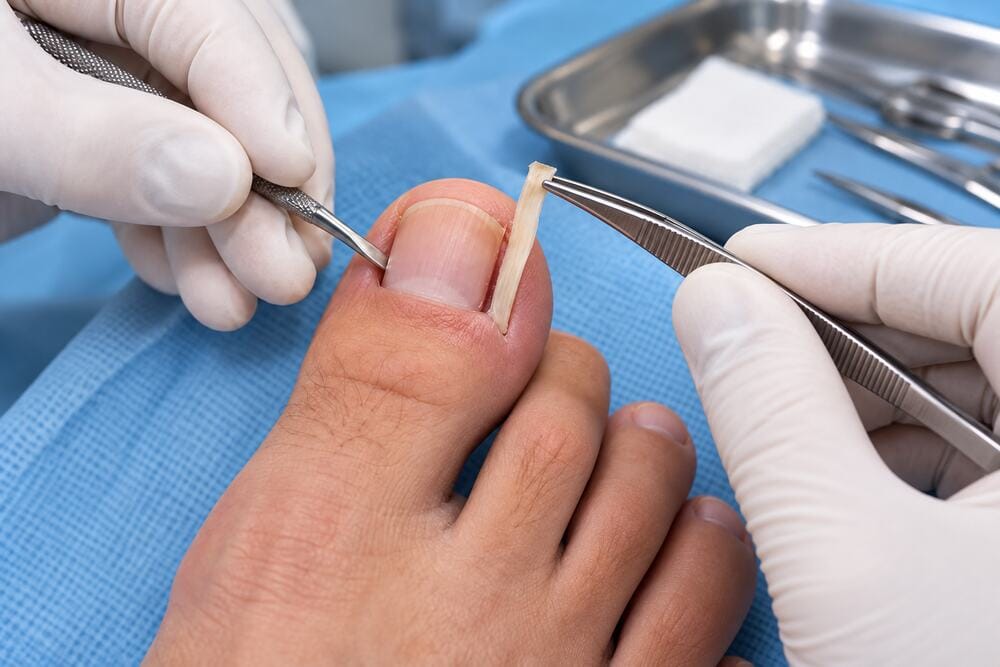
After toenail removal, some pain, swelling, and drainage are a normal part of healing. Sometimes, though, healing slows down and an infection sets in instead. Signs to watch for include spreading redness, pus or bad smell, worsening swelling, increasing pain, and fever or chills. In this article, Foot + Ankle Specialty Center explains the signs of infection after toenail removal, what to look for, and when to seek care.
Table of Contents
ToggleIs There a Risk of Infection After Toenail Removal?
Yes, infection is possible after toenail removal because the skin under the nail needs time to heal. However, proper aftercare can lower the risk. Keep the toe clean and follow your podiatrist’s care instructions. Contact a podiatrist if you notice signs of infection or if your symptoms get worse.
What Is Normal After Toenail Removal?
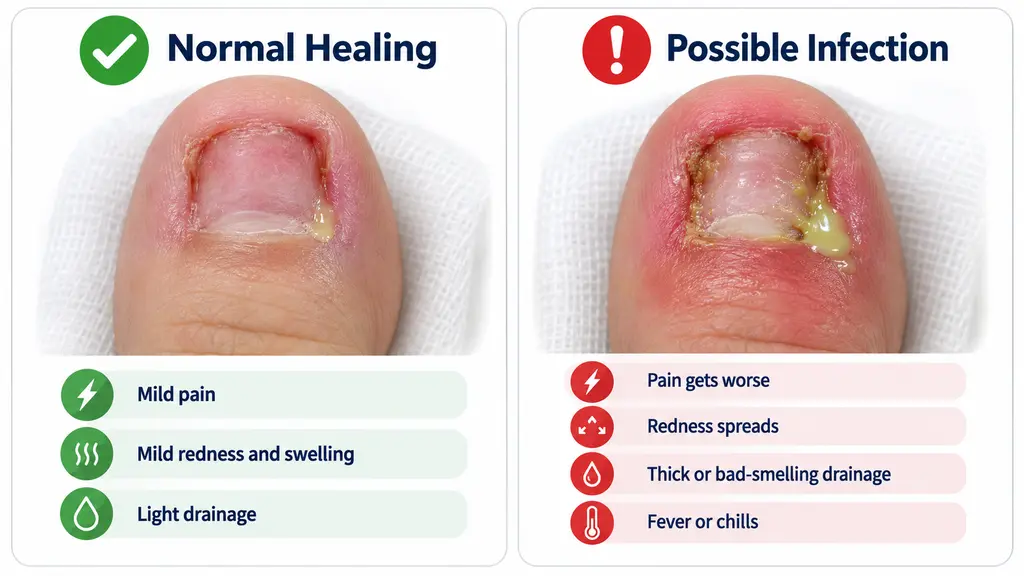
Mild pain, swelling, and redness are common during the first few days after toenail removal. The area may feel sore or tender, especially when you walk or wear closed shoes.
You may also notice a small amount of clear, light yellow, or slightly bloody drainage on the bandage. This can be part of normal healing. A thin scab may form as the skin begins to close.
Signs of Infection After Toenail Removal Surgery
Watch your toe closely for changes after the surgery. Your toe should get better each day, not worse. If you notice these symptoms, they may be signs of infection after toenail treatment.
Spreading Redness and Warmth
Mild redness and warmth can be normal at first. However, redness that spreads beyond the nail area or skin that feels hotter than your other toes may signal an infection. Contact your podiatrist if these symptoms get worse.
Pus or Bad-Smelling Drainage
A small amount of clear, pale yellow, or slightly bloody fluid can be normal at first. Thick yellow or green pus, sticky drainage, or a strong smell may be a sign of infection, especially if it increases or does not improve.
Swelling that gets worse
Swelling is normal in the first two days. After that, it should start to go down. If the toe swells more on the third or fourth day, this is not a good sign. When the skin feels tight and hot or the swelling spreads, it shows that infection may be inside. This kind of swelling often comes with redness and pain. These are clear signs of infection after toenail removal.
Increased pain or throbbing
Pain after surgery should not get worse. It should slowly go away each day. If the toe begins to throb or ache more than before, something is wrong. Pain that feels like a strong pulse or burning inside the toe can mean infection. When pain stops responding to medicine or returns after going away, it may be one of the signs of infection after toenail removal.
Fever or chills
If the infection spreads, it can affect your whole body. You may develop a fever above 100.4°F or feel cold, tired, or weak. These symptoms are not part of normal healing. Fever or chills after surgery can be serious signs of infection after toenail removal. Seek prompt medical care, especially if you have diabetes and need diabetic foot care.
How to Prevent Infection After Toenail Removal Surgery
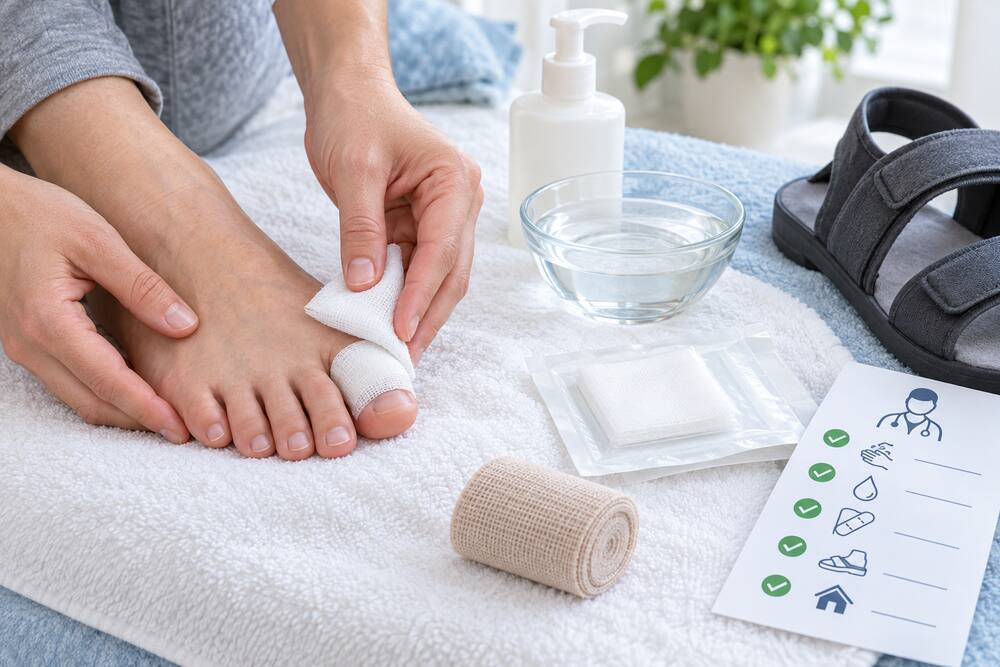
Proper foot wound care can help lower the risk of toenail removal infection. Follow your podiatrist’s instructions for toenail removal aftercare because cleaning and bandage care may vary.
- Wash the toe gently each day using mild soap and warm water.
- Dry the toe completely after cleaning.
- Cover the toe with a clean bandage your doctor recommends. (Learn more about how to bandage an ingrown toenail and when to change the dressing after removal.)
- Wear loose or open shoes that do not press on the toe.
- Only touch your toe if your hands are clean.
- Do not soak your toe unless your doctor says it’s safe.
When to Contact Your Podiatrist
Contact your podiatrist if your toe is not healing or your symptoms are getting worse. Early treatment can help prevent the infection from becoming more serious. According to the National Health Service, an untreated skin infection can spread to other parts of the body. Get medical help promptly if redness begins to spread or you develop a fever or chills.
Foot + Ankle Specialty Centers has more than 1,000 Google reviews and locations in Phoenix, Scottsdale, Chandler, Mesa, and Gilbert. Make an appointment today if you are concerned about your infected toe after toenail removal.
Let’s Recap
Many people heal well after toenail removal. Some people develop problems if they do not care for the toes correctly. It is important to know the signs of infection after toenail removal so you can take action early. You must not wait for the toe to get worse. If you feel more pain after ingrown toenail surgery or notice anything unusual, speak to a doctor. At Foot and Ankle Specialty Centers, we help people heal and avoid serious infection.
FAQs
Is it normal to have pain after ingrown toenail surgery?
Mild pain is normal for a few days, but severe or increasing pain may be a sign of infection.
How do I know if my toe is infected after surgery?
Look for redness, swelling, pus, warmth, or a bad smell around the toe.
Can I walk after ingrown toenail surgery?
Yes, but keep pressure off the toe and follow your doctor’s care instructions.
How do I care for my toe after surgery?
Keep the area clean and dry, change bandages as directed, and avoid tight shoes.
When should I call the doctor after ingrown toenail surgery?
Call the best foot doctor in Phoenix if you notice signs of infection or if pain and swelling get worse after a few days.
Why do I need nail surgery?
Nail surgery may remove a painful, infected, or badly ingrown nail when other treatments have not helped your toe heal.







2 Comments
It’s been 10 days after toenail removed and it still hurts and throbs and toenail is red still.im trying to air it out because I’ve had bandage on every day guess it’s time to see doc
Thanks for sharing what you’re experiencing. That sounds uncomfortable. Some soreness and mild redness can be normal in the first few days after a toenail removal, but persistent throbbing pain, increasing redness, or discomfort that hasn’t improved after 10 days can be a sign that something more is going on, like an infection or delayed healing. It’s good that you’re paying attention to it, and yes, giving it some air can help, but I’d strongly recommend checking in with your doctor or podiatrist as soon as you can so they can assess it, make sure there’s no infection, and guide you on the best next steps for healing safely.