
Bunion vs. Regular Foot Pain: How to Tell the Difference
- Published by: Payam Sarraf
- on
- | Updated on August 12, 2026
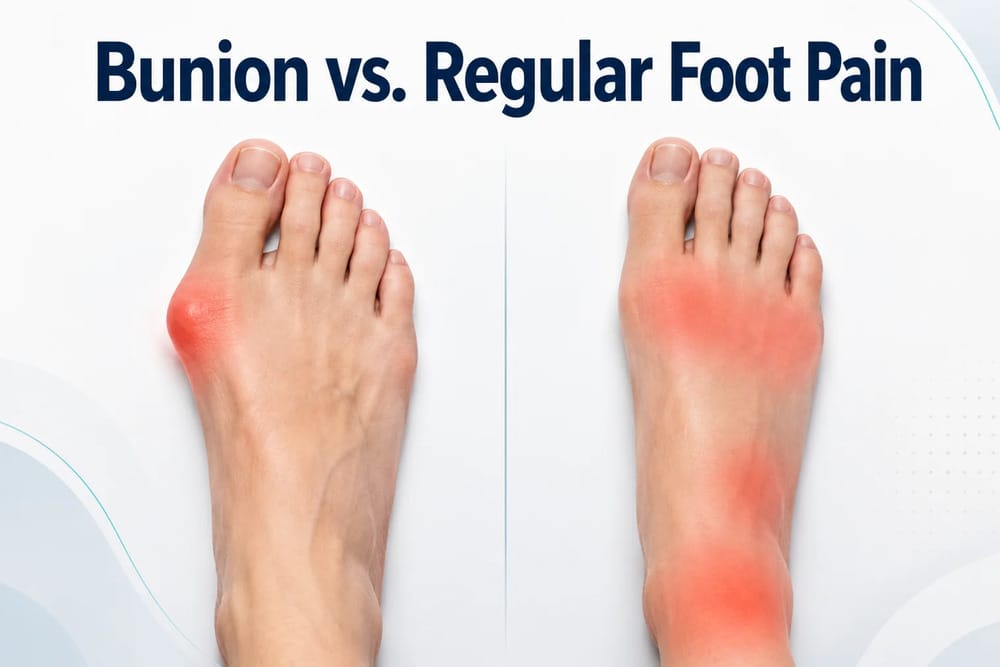
Foot pain can come from tight shoes, too much activity, an injury, or a medical condition. Soft tissue fatigue affects the muscles, tendons, or ligaments, while a bunion affects the bone and joint at the base of the big toe. The location of the pain and how it started can help you understand the cause. Arthritis, gout, and plantar fasciitis may also cause similar pain. In this guide, Foot + Ankle Specialty Centers explains the differences and the signs to look for.
Table of Contents
ToggleUnderstanding Your Foot Pain
Foot pain can come from standing for a long time, increased activity, tight shoes, or a minor injury. It may affect the heel, arch, ball, toes, or top of the foot. Mild pain often improves with rest, but pain that lasts or gets worse may need medical care.
Pay attention to:
- The exact location of the pain
- When and how the pain started
- Any bump, redness, warmth, or swelling
- Stiffness in the foot or toes
- Activities or shoes that make it worse
- Whether rest helps
This information can help a podiatrist find the cause and recommend the right care.
What Is a Bunion and What Does Bunion Pain Feel Like?
A bunion is a change in the position of the joint at the base of the big toe. It forms when the big toe begins to lean toward the second toe. As the joint moves out of place, a hard bump may appear on the inner side of the foot.
Bunion pain often feels like an ache or soreness around the big-toe joint. The area may also become red, swollen, or tender. Shoes can rub against the bump and make the pain worse. Some people also feel pain when they walk or push off with the big toe.
Other possible signs include:
- A hard bump beside the big toe
- Red or irritated skin over the bump
- Swelling around the joint
- A big toe that points toward the other toes
- Corns or calluses where the toes rub
- Less movement in the big toe
- Trouble finding comfortable shoes
A bunion may develop slowly over time. Some bunions do not cause any pain, especially in the early stages.
Bunion Pain vs. Other Common Foot Pain
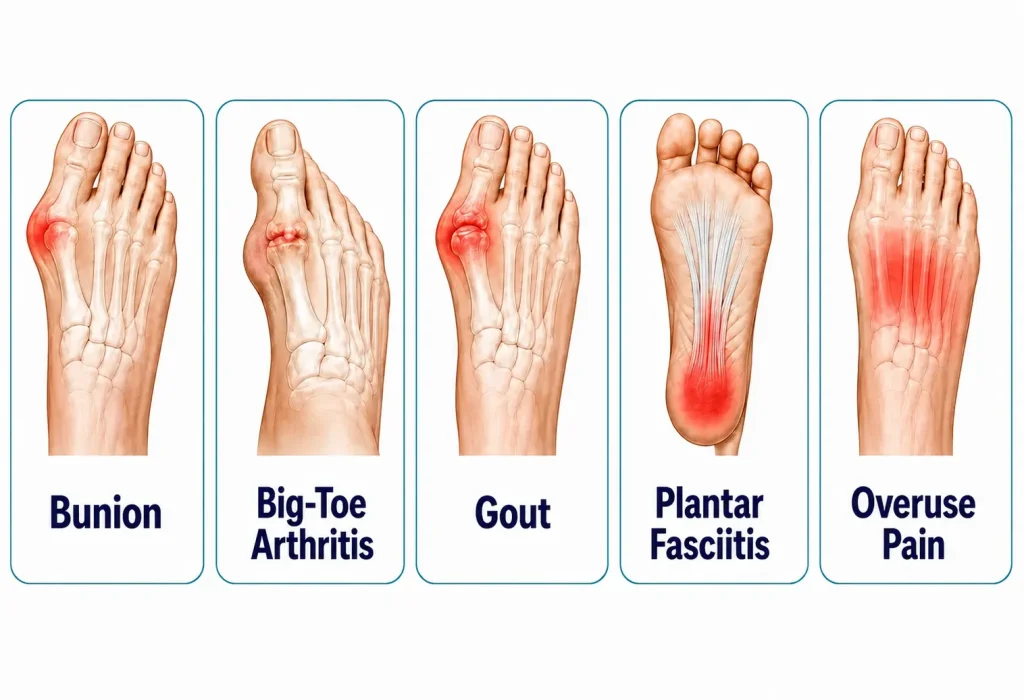
Foot pain can affect different parts of the foot. Some conditions cause pain that starts slowly, and others cause sudden pain. The location of the pain, changes in the foot, and actions that make it worse can offer useful clues. Below, we explain the main differences between bunion pain and other common types of foot pain.
| Condition | Common Pain Location | Common Signs | Pain Pattern |
| Bunion | Inner side of the big-toe joint | Side bump and a big toe that leans inward | Often develops slowly and becomes worse in tight shoes |
| Big-toe arthritis | Inside or on top of the big-toe joint | Joint stiffness and sometimes a bump on top | Often hurts when the toe bends during walking |
| Gout | Often the big-toe joint | Sudden redness, warmth, tenderness, and swelling | Intense pain may begin quickly during a flare |
| Plantar fasciitis | Under the heel or along the bottom of the foot | Heel tenderness without a big-toe bump | Often worse with the first steps after rest |
| Overuse pain | Depends on the activity | Soreness without a fixed deformity | Often starts after more walking, running, or exercise |
Bunion vs. Arthritis
A bunion and big-toe arthritis can both cause pain near the base of the big toe. However, there are some common differences. A bunion usually causes a bump on the inner side of the big-toe joint. The big toe may also lean toward the second toe. Pain often comes from pressure on the bump, especially inside narrow shoes.
Big-toe arthritis, also called hallux rigidus, often causes stiffness. You may have trouble bending the toe up or down. A hard bump can form on top of the joint instead of on the inner side. Walking, running, or pushing off with the toe may hurt. The American Academy of Orthopaedic Surgeons explains that hallux rigidus can cause pain, stiffness, and a bump on top of the big-toe joint.
A person can have a bunion and arthritis in the same joint. An examination and X-ray can show the position of the bones and whether the joint has damage.
Bunion vs. Plantar Fasciitis
Bunions and plantar fasciitis usually affect different parts of the foot. Bunion pain occurs near the joint at the base of the big toe. You may see a bump on the inner side of the foot, and shoes may press against it. Plantar fasciitis causes pain under the heel or along the bottom of the foot.
The pain is often strongest when you take your first steps in the morning or stand after sitting for a long time. It may improve after some movement but return after long periods on your feet. Plantar fasciitis does not normally cause a bump beside the big toe or push the toe toward the other toes.
Bunion vs. Gout
Bunions and gout can both cause redness, swelling, and pain around the big toe. The way the pain begins is often different. A bunion usually changes the shape of the foot over time. Pain may come and go, and tight shoes or long periods of walking may make it worse.
Gout often causes a sudden attack of severe joint pain. The big-toe joint may become very red, hot, swollen, and sensitive. Even light pressure from a sock or bedsheet may hurt.
When to See a Podiatrist
Mild foot pain may improve after rest or a change in shoes. However, you should see a podiatrist if the pain continues, becomes worse, or affects your normal activities. Schedule an evaluation if you have:
- Ongoing pain around the big toe
- A bump that continues to grow
- Trouble walking or exercising
- Less movement in the big toe
- Shoes that no longer fit comfortably
- Corns or calluses between the toes
- A big toe that continues to move toward the second toe
- Pain that does not improve with rest or wider shoes
Seek prompt medical care if you have sudden severe pain, major swelling, warmth, spreading redness, a fever, an open wound, or an inability to put weight on your foot. These signs may point to an infection, injury, gout attack, or another problem that needs medical attention.
A podiatrist can examine your foot, check the joint movement, and review how you walk. Weight-bearing X-rays may also help show bone alignment, arthritis, or another cause of pain.
Final Thoughts
Understanding bunion vs. regular foot pain can help you know when to seek care. A bunion often causes a bump and pain near the big-toe joint, but other problems can cause similar symptoms.
Dr. Payam Sarraf, DPM, and the trusted team at Foot + Ankle Specialty Centers provide expert care based on each patient’s needs. With more than 1,000 five-star reviews, our team is proud to help patients find relief and move with greater comfort. Contact us today to schedule an appointment.
FAQs
Can a bunion be mistaken for something else?
Yes. Arthritis, gout, bursitis, an injury, or another joint problem may cause similar pain and swelling. A foot examination and X-ray can help identify the cause.
How can you tell if you have a bunion or arthritis in your big toe?
A bunion often creates a side bump and pushes the toe inward. Arthritis usually causes more joint stiffness and may create a bump on top of the toe.
What does the beginning of a bunion look like?
An early bunion may look like a small bump at the inner base of the big toe. The toe may begin to lean toward the second toe.
Can gout feel like a bunion?
Yes. Both can cause pain, redness, and swelling near the big toe. Gout pain often starts suddenly and feels intense, while bunion symptoms usually develop more slowly.

Payam Sarraf
Payam Sarraf, DPM, is a podiatry specialist and surgeon at Foot + Ankle Specialty Centers, with offices in Gilbert, Scottsdale, Chandler, and Phoenix, Arizona. Dr. Sarraf’s areas of expertise include ankle trauma, Achilles tendon ruptures, podopediatrics, ankle arthroscopy and reconstruction and biomechanics.
Related posts
- Payam Sarraf
- September 3, 2026
- No Comments
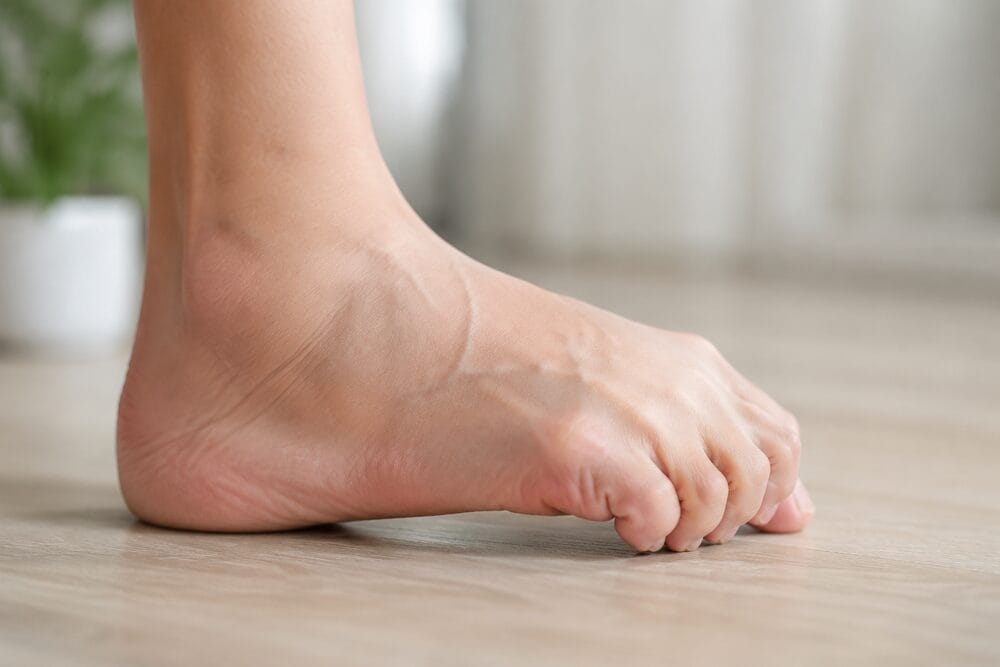
Toe curling happens when your toes bend downward and inward toward the bottom of your foot. Common causes include muscle spasms, nerve problems, dystonia, toe deformities, […]
- Payam Sarraf
- August 29, 2026
- No Comments
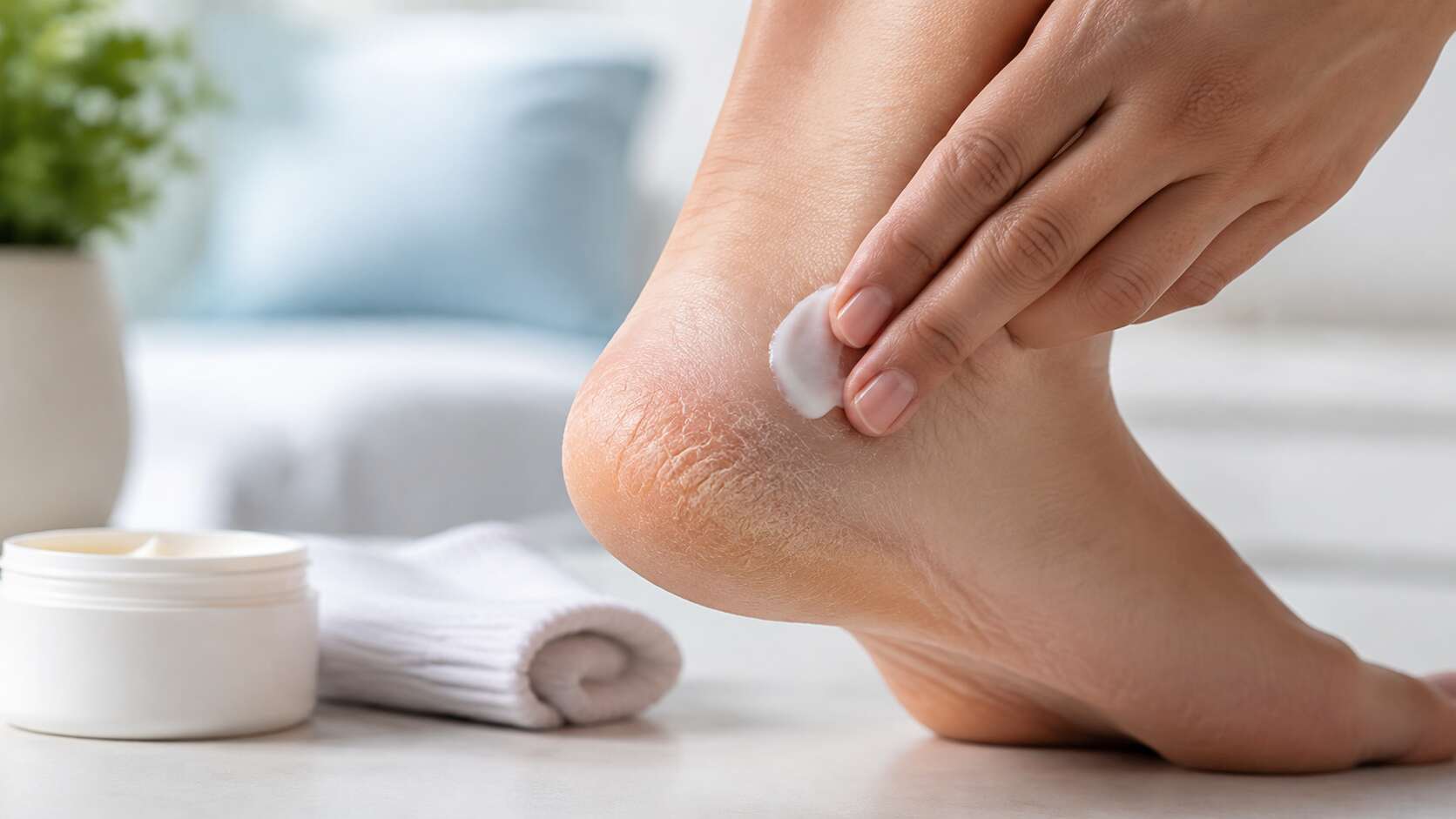
Cracked heels develop when dry, thick skin splits under pressure from standing or walking. To help them heal, soak your feet, exfoliate the dry skin, moisturize […]
- Payam Sarraf
- August 29, 2026
- No Comments
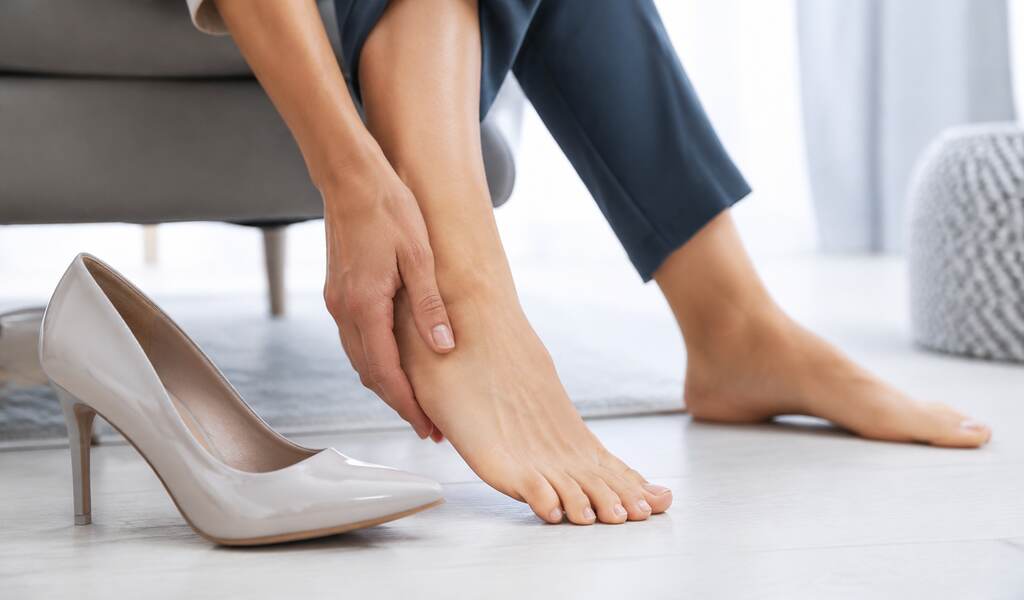
High heels can cause a forward weight shift, which puts extra pressure on your toes and the front of your feet. A narrow toe box may […]