
Why Are My Toes Numb After Wearing Heels?
- Published by: Payam Sarraf
- on
- | Updated on August 29, 2026
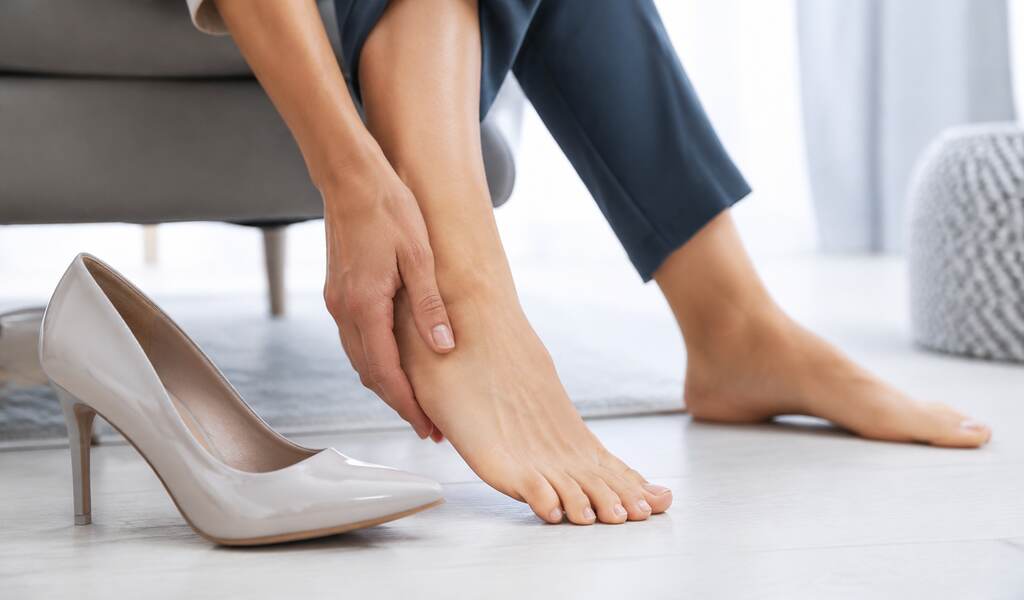
High heels can cause a forward weight shift, which puts extra pressure on your toes and the front of your feet. A narrow toe box may squeeze your toes and cause nerve irritation. As a result, your toes may feel numb, sore, tingly, or painful.
These symptoms often improve after you remove the shoes. However, numbness that lasts or keeps returning may point to a nerve or foot problem. In this guide, Foot + Ankle Specialty Centers explains everything about why toes feel numb after wearing heels.
Table of Contents
ToggleIs Pain From High Heels Common?
Foot pain from high heels is common. Heels change how your weight spreads across your feet. They move more weight toward your toes and the balls of your feet.
Narrow or pointed heels also squeeze your toes together. This can cause:
- Numb toes
- Tingling or burning
- Swelling
- Pain under the toes
- Blisters
- Corns and calluses
Some discomfort may happen after wearing heels for several hours. However, you should not ignore regular pain or numbness. Your shoes may not fit well, or they may be pressing on a nerve.
5 Common Causes of Numb Toes After Wearing Heels
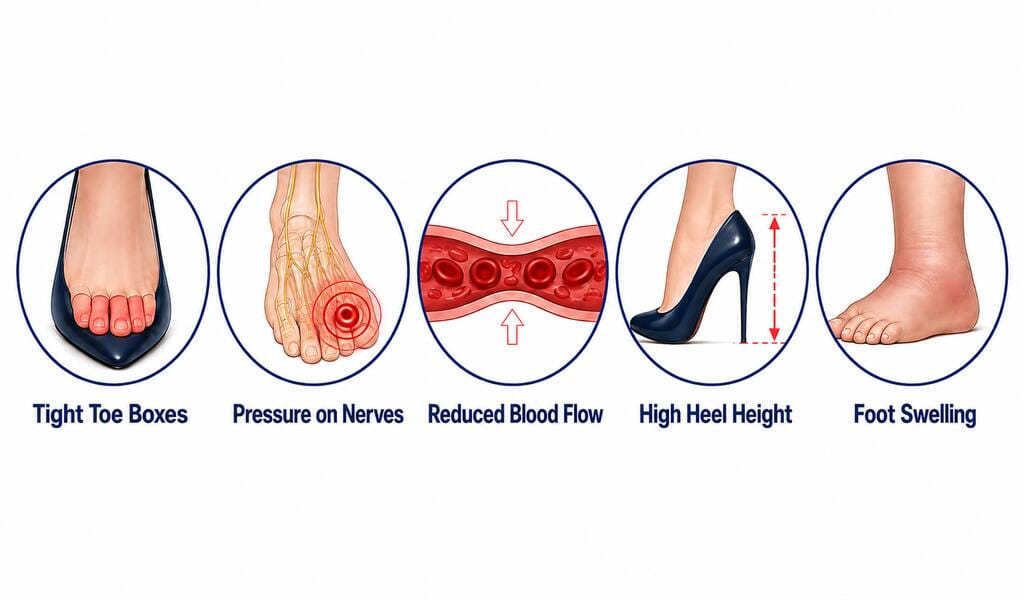
Several things can cause numb toes after wearing heels. Common causes include tight shoes, nerve pressure, reduced blood flow, high heels, and swelling.
Tight Toe Boxes
The toe box is the front part of your shoe. Many heels have narrow or pointed toe boxes. They push your toes together and give them little room to move. This pressure may affect the skin, joints, and nerves in your toes. You may feel numbness, pain, or tingling. You may also develop blisters or corns.
Choose shoes that give your toes enough room. Your toes should not rub, bend, or overlap inside the shoes.
Pressure on Nerves
High heels move your body weight toward the ball of your foot. This can press on the nerves that run to your toes. Pressure on a nerve may cause:
- Numbness
- Tingling
- Burning
- Sharp pain
Repeated pressure may sometimes lead to Morton’s neuroma. This condition affects a nerve in the ball of the foot. It often causes pain between the toes. Not every numb toe means you have Morton’s neuroma. A podiatrist can examine your foot and find the cause.
Reduced Blood Flow
Tight shoes may press on the small blood vessels in your feet. This can reduce blood flow to your toes for a short time. Your toes may feel numb, cold, or as if they have fallen asleep. Feeling should begin to return after you remove the shoes.
Get medical help if a toe stays numb, becomes very cold, or changes color. A pale or blue toe may be a sign of a blood flow problem.
High Heel Height
Higher heels place more pressure on the front of your feet. This can increase pain and numbness in your toes. Thin heels may also make it harder to balance. Your toes may grip the shoes as you walk.
This adds more pressure to your muscles and nerves. Lower, wider heels provide better support. They also spread your weight more evenly across your feet.
Foot Swelling
Your feet may swell after you stand or walk for a long time. Heat can also cause swelling. This may make your shoes feel tighter later in the day and press on your toes and nerves. Try on heels later in the day when your feet are slightly larger. Do not buy heels that feel tight.
How to Relieve Pain From Feet in Heels
Remove your heels when you feel pain or numbness. Do not keep wearing shoes that make the problem worse. Try these simple steps:
- Rest your feet.
- Raise your feet on a pillow.
- Gently move your toes.
- Massage your feet.
- Change into supportive shoes.
- Use a wrapped cold pack for 15 to 20 minutes.
- Never place ice directly on your skin.
- Avoid painful heels until your feet feel better.
- Choose heels with a wide toe box.
- Choose a lower and wider heel.
- Use soft insoles to reduce pressure.
- Make sure the insoles do not tighten your shoes.
- Limit how long you wear heels.
- Bring comfortable shoes when walking or standing for hours.
- See a podiatrist if the numbness lasts, returns, or makes walking difficult.
Final Thoughts
Numb toes after wearing heels often come from tight shoes, high heels, swelling, nerve pressure, or reduced blood flow. Removing the shoes and resting your feet may help. Choose lower heels with more room for your toes. Do not ignore numbness that lasts or happens often.
With over 1000 five-star Google reviews, Foot + Ankle Specialty Centers treats foot and ankle problems in Gilbert, Scottsdale, Chandler, Mesa, and Phoenix. Call 480-812-3668 to schedule an appointment with a podiatrist.
FAQs
How to Get Rid of Numb Toes After Wearing Heels?
Take off your heels, rest, raise your feet, and move your toes. See a podiatrist if numbness continues or returns.
Can Wearing High Heels Cause Toe Numbness?
Yes. High heels push weight forward and squeeze your toes, which can affect nerves and blood flow, causing temporary numbness.
Why Are My Toes Numb After Wearing Shoes?
Your shoes may be too tight or narrow. Lasting numbness may come from nerve pressure, diabetes, or poor circulation problems.
When Should I Worry About a Numb Toe?
See a doctor if numbness lasts, returns, affects walking, or comes with severe pain, swelling, weakness, or toe color changes.

Payam Sarraf
Payam Sarraf, DPM, is a podiatry specialist and surgeon at Foot + Ankle Specialty Centers, with offices in Gilbert, Scottsdale, Chandler, and Phoenix, Arizona. Dr. Sarraf’s areas of expertise include ankle trauma, Achilles tendon ruptures, podopediatrics, ankle arthroscopy and reconstruction and biomechanics.
Related posts
- Payam Sarraf
- September 3, 2026
- No Comments
Toe curling happens when your toes bend downward and inward toward the bottom of your foot. Common causes include muscle spasms, nerve problems, dystonia, toe deformities, […]

- Payam Sarraf
- August 29, 2026
- No Comments
Cracked heels develop when dry, thick skin splits under pressure from standing or walking. To help them heal, soak your feet, exfoliate the dry skin, moisturize […]
- Payam Sarraf
- August 21, 2026
- No Comments
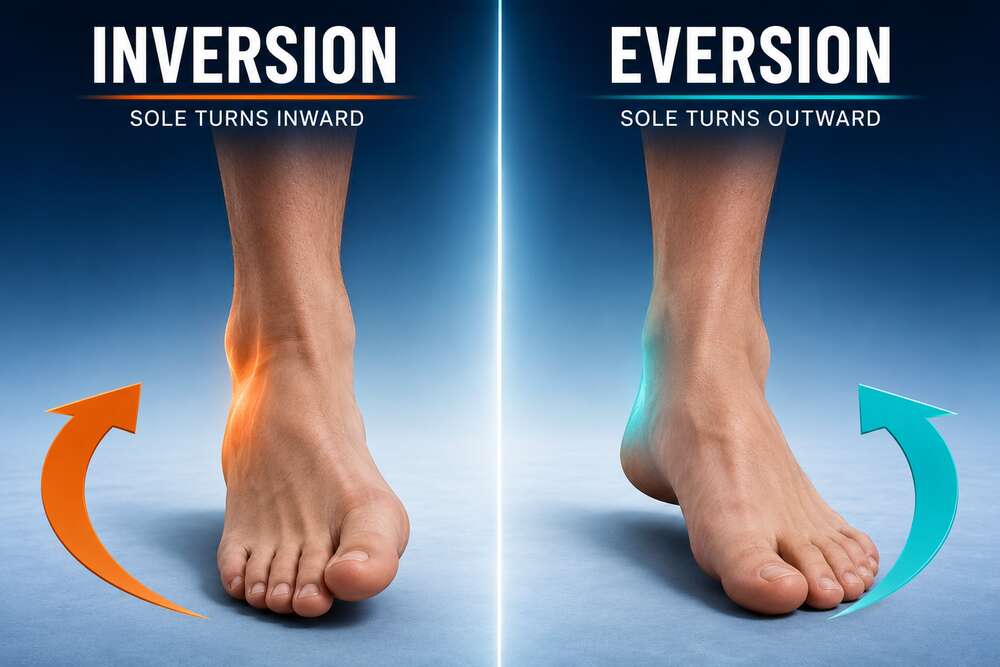
Inversion and eversion are two normal movements of the foot. Inversion turns the sole of the foot inward. Eversion turns the sole outward. Your feet use […]