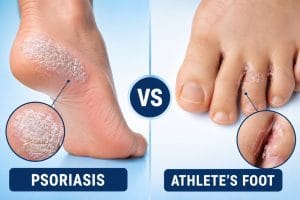
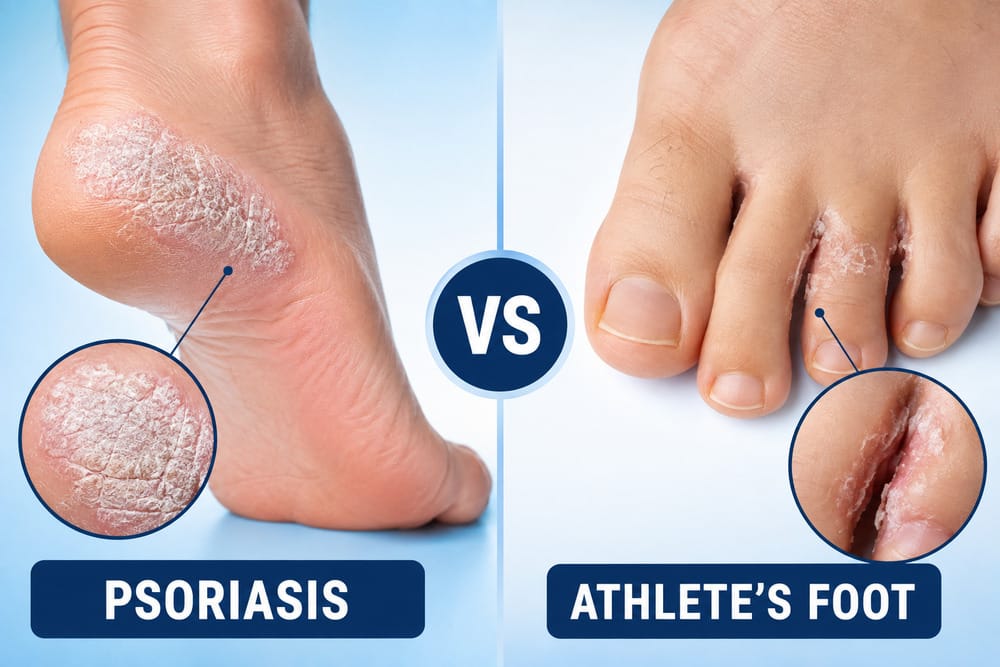
Dry, itchy, or peeling skin on your feet can have several causes. Two common possibilities are psoriasis and athlete’s foot. These conditions can look similar, but they are not the same. Athlete’s foot is a fungal infection that can spread to other people. Psoriasis is an immune system condition and is not contagious.
Because they require different treatments, it is important to know which condition you have. In this guide, Foot + Ankle Specialty Centers explains how to tell psoriasis or athlete’s foot apart, their symptoms and causes, and when to see a doctor.
Table of Contents
ToggleSymptoms of Psoriasis and Athlete’s Foot
Both conditions can cause dry, cracked, or scaly skin. However, there are some differences. The table below compares the common symptoms of foot psoriasis and athlete’s foot.
| Foot Psoriasis | Athlete’s Foot |
| Thick, clearly defined skin patches | Peeling, flaky, or moist skin |
| Often affects the heels or soles | Often begins between the toes |
| May cause deep, painful cracks | Often causes itching and burning |
| May affect both feet | May begin on one foot |
| Can affect other parts of the body | Usually remains on the feet unless it spreads |
| Is not contagious | Can spread to other people |
Symptoms can vary from person to person. Some people may also have psoriasis and a fungal infection at the same time.
Causes of Psoriasis and Athlete’s Foot
Psoriasis and athlete’s foot have completely different causes. Psoriasis is linked to the immune system. Athlete’s foot comes from a fungal infection. The cause helps your doctor choose the right treatment.
Causes of Psoriasis
Psoriasis happens when the immune system makes skin cells grow too quickly. The extra cells build up and form thick, scaly patches on the feet or other parts of the body. It can also affect the toenails. In some people, psoriasis causes joint pain and swelling, which is called psoriatic arthritis.
You may be more likely to develop psoriasis if it runs in your family. Symptoms may also appear or become worse because of:
- Stress
- Skin injuries
- Certain infections
- Some medications
- Smoking
- Cold or dry weather
Psoriasis is not caused by poor hygiene, and you cannot catch it from another person.
Causes of Athlete’s Foot
Athlete’s foot is caused by a fungus. The fungus grows well in warm and damp places. You may develop athlete’s foot from:
- Walking barefoot in public showers
- Using shared locker rooms or pool areas
- Wearing damp socks
- Wearing tight shoes that trap sweat
- Sharing shoes, socks, or towels
- Not drying carefully between your toes
The infection can spread through direct contact or contaminated floors, shoes, socks, and towels.
5 Tips for Telling Athlete’s Foot and Psoriasis Apart
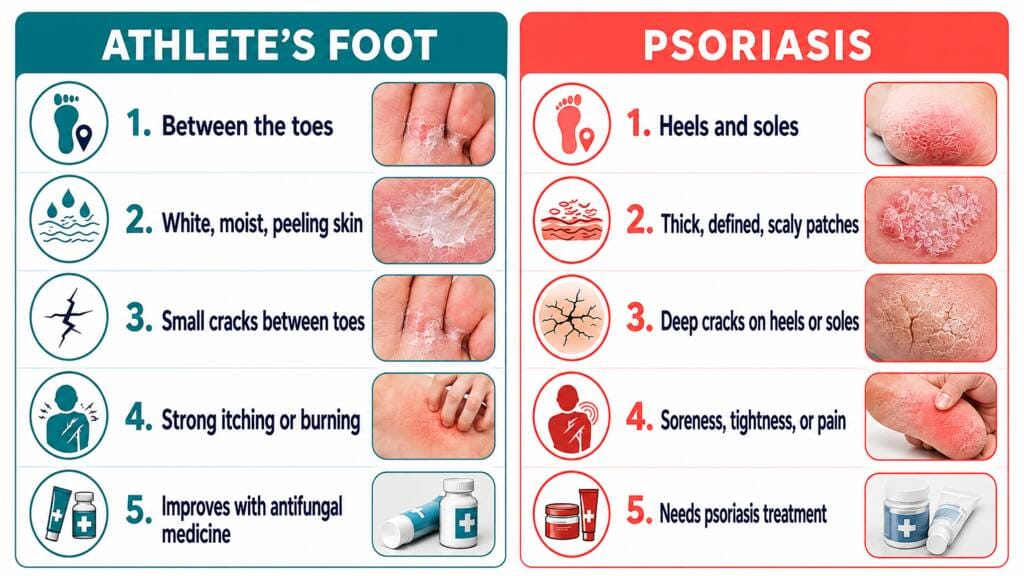
The following signs may help you understand your symptoms. However, only a healthcare provider can give you an accurate diagnosis.
1. Location
Athlete’s foot often starts between the toes and may spread to the soles, sides, and toenails. It may begin on only one foot. Psoriasis often affects the same areas on both feet, especially the heels, soles, tops of the feet, and toenails. Similar patches may also appear on the knees, elbows, scalp, or hands.
Fungal toenails often become thick, yellow, and crumbly. Nail psoriasis may cause tiny dents, spots that look like drops of oil, or nails that lift away from the skin underneath.
2. Skin Changes
Athlete’s foot may make the skin between your toes look white, soft, moist, or peeling. It can also cause dry, flaky skin on the soles. Some cases may cause small, itchy blisters on the arch or sole of the foot.
Psoriasis usually causes thick, clearly defined patches with silvery-white scales on top. The skin may look red, purple, gray, or dark brown, depending on your natural skin tone. A less common type, called palmoplantar pustulosis, can cause small pus-filled blisters on the soles. Skin color alone cannot confirm the condition.
3. Cracks in the Skin
Both conditions can cause the skin to crack. Athlete’s foot often causes small cracks and peeling between the toes. Psoriasis may cause deeper cracks on the heels or soles. These cracks can hurt or bleed when you stand or walk. Open cracks can also allow bacteria to enter the skin and cause an infection.
4. Itch vs. Pain
Athlete’s foot often causes strong itching. You may also feel burning or stinging between your toes or across the bottom of your foot. Psoriasis can itch, but it may also cause soreness, tight skin, and pain. Deep cracks from psoriasis may make walking uncomfortable. Either condition can cause itching and pain, so these symptoms alone may not provide a clear answer.
5. Response to Treatment
Athlete’s foot usually improves with antifungal medicines, such as terbinafine (Lamisil) or clotrimazole (Lotrimin). These medicines often come as creams, but stubborn infections may need an oral antifungal. Use the medicine for the recommended amount of time, even if the rash starts to improve.
Antifungal medicine does not treat psoriasis. Psoriasis treatment may include moisturizers, topical corticosteroids, vitamin D creams such as calcipotriene, or phototherapy, also called light therapy. Severe cases may need biologic medicines.
Do not use psoriasis or steroid cream on an unexplained foot rash without medical advice. Steroid creams can hide the signs of a fungal infection and may allow it to become worse.
When to See Your Doctor
It may be time to schedule an appointment if:
- The rash does not improve
- The problem keeps returning
- The rash spreads to your toenails
- Cracks become deep, painful, or bloody
- Your foot becomes warm or swollen
- You notice drainage, pus, or a bad smell
- Walking becomes painful
- You are unsure which condition you have
People with diabetes, poor circulation, or a weakened immune system should seek care sooner. Even a small crack or infection can become a more serious foot problem.
An experienced podiatrist can examine your skin and toenails. If the cause is unclear, the podiatrist may take a small skin scraping. They may check it under a microscope with a KOH test or send it for a fungal culture. The results help your doctor choose the right treatment.
Final Thoughts
Psoriasis and athlete’s foot can both cause itching, peeling, scaling, and cracked skin. However, the causes and treatments of psoriasis or athlete’s foot are different. Athlete’s foot is a fungal infection that can spread to others. Psoriasis is an immune system condition and is not contagious. Using the wrong treatment may allow your symptoms to continue or become worse.
Foot + Ankle Specialty Centers diagnoses and treats athlete’s foot, foot psoriasis, cracked skin, fungal toenails, and other foot conditions. We have convenient offices in Gilbert, Scottsdale, Chandler, Mesa, and Phoenix. Call 480-812-3668 or book an appointment for a careful examination and personalized treatment plan.
FAQs
Are psoriasis and athlete’s foot both contagious?
No. Athlete’s foot is a contagious fungal infection. Psoriasis is an immune system condition and cannot spread from one person to another.
Can a fungal infection be mistaken for psoriasis?
Yes. Fungal infections and psoriasis can both cause dry, scaly, itchy, or cracked skin. A foot examination or fungal test can help confirm the cause.
Can I use psoriasis cream for athlete’s foot?
No, unless your doctor recommends it. Some psoriasis creams contain steroids that may hide or worsen an untreated fungal infection. Athlete’s foot usually needs antifungal medicine.
What Is Commonly Mistaken for Athlete’s Foot?
Dry skin, eczema, psoriasis, contact dermatitis, and some bacterial infections can look like athlete’s foot. A professional examination can identify the cause.