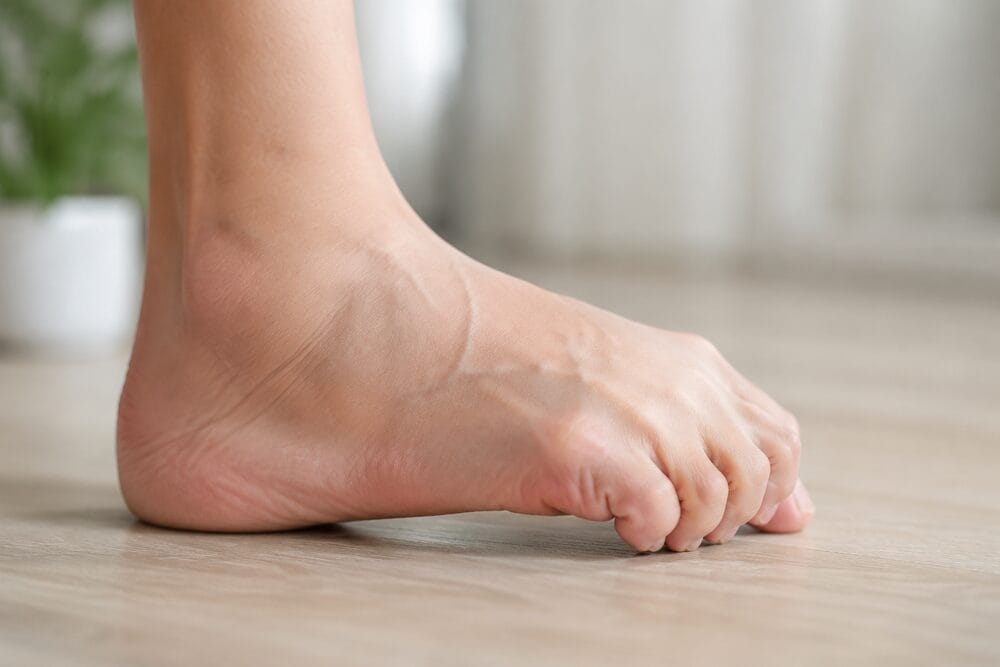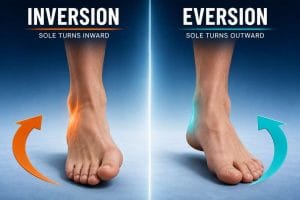

Sharp or stabbing heel pain, especially with your first steps in the morning, is a common sign of plantar fasciitis. A plantar fasciitis night splint may ease morning pain by gently stretching your foot while you sleep. It can help some people, but it may not work for everyone.
Heel pain can also have other causes, so getting the right diagnosis matters. Our podiatrists at Foot + Ankle Specialty Centers can identify the cause of your pain and determine whether a night splint is right for you. Keep reading to learn how night splints work, their benefits and possible side effects, and whether one may be right for you.
Table of Contents
ToggleWhat Is a Night Splint?
A night splint is a brace worn on the foot and lower leg while you sleep. It holds your foot in a neutral position or gently pulls your toes toward your shin. This position keeps the plantar fascia and calf muscles slightly stretched during the night.
Without a night splint, your foot may point downward while you sleep. This can cause the plantar fascia to tighten and make your first steps in the morning more painful.
What Are the Best Plantar Fasciitis Night Splints?
There is no single best night splint for everyone. The right choice depends on fit, comfort, and how easy it is to wear consistently. Here are the main options:
Type | How It Works | Comfort and Fit |
Posterior night splint | Uses firm support along the back of the leg and foot | Provides strong support but may feel bulky in bed |
Dorsal night splint | Sits across the front of the foot and lower leg | Feels less bulky, but the straps may create pressure points |
Sock-style splint | Uses a soft strap to gently pull the toes upward | Feels lightweight and flexible but may provide less support |
Choose a splint with adjustable straps, soft padding, and breathable material. It should feel secure without causing pain, numbness, tingling, or skin irritation. Proper fit and comfort matter because discomfort may cause you to stop wearing the splint regularly.
Are Night Splints Good for Plantar Fasciitis?
Yes, night splints can help some people with plantar fasciitis, especially those who regularly have heel pain with their first steps in the morning. They keep the foot gently stretched while you sleep, which may reduce overnight tightness.
The 2023 clinical practice guideline published in the Journal of Orthopaedic & Sports Physical Therapy states: “Clinicians should prescribe a 1- to 3-month program of night splints” for people who consistently experience first-step morning pain. Read the clinical practice guideline.
However, night splints are an added treatment. They should not replace stretching, supportive footwear, physical therapy, custom orthotics, or other appropriate care.
Benefits of Night Splints for Plantar Fasciitis
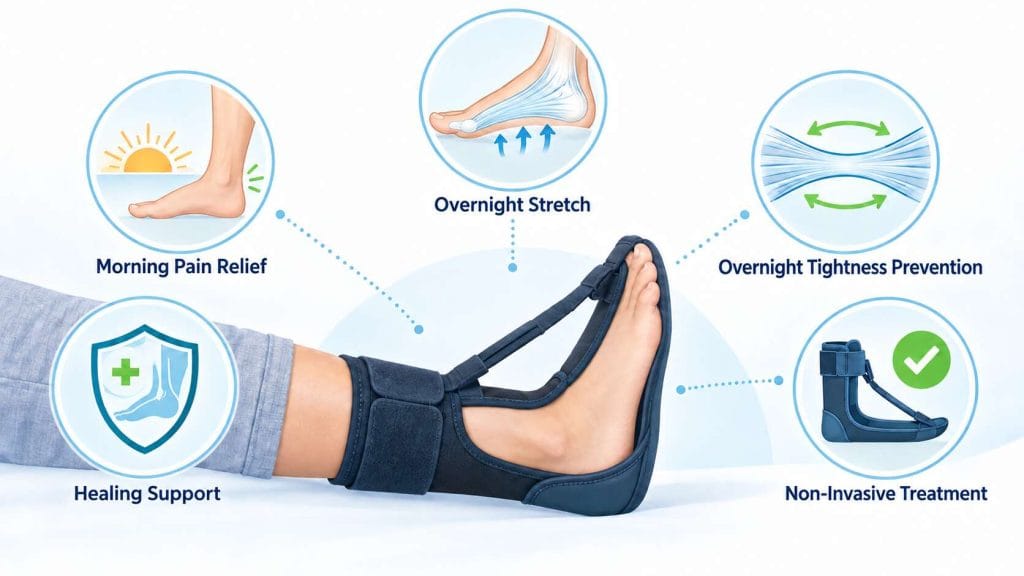
Plantar fasciitis brace offers several advantages for anyone dealing with this condition, such as:
- They keep your foot stretched while you sleep.
- They reduce morning pain significantly.
- They prevent the plantar fascia from tightening overnight.
- They promote faster healing.
- They provide a non-invasive treatment option.
How Do Night Splints Help Plantar Fasciitis?
Night splints hold your foot in a neutral or slightly flexed position while you sleep. This gently stretches the plantar fascia and Achilles tendon during sleep. According to the American Academy of Orthopaedic Surgeons, a night splint may prevent these tissues from shortening overnight and reduce pain during your first steps in the morning.
However, results vary, and some people find night splints uncomfortable. They work best as part of a broader treatment plan.
How Long for Night Splints to Help Plantar Fasciitis?
Night splints do not provide immediate relief. Some people may notice less morning pain within a few weeks, while others may need more time. According to the American Academy of Family Physicians, night splints may help reduce heel pain with the first steps in the morning, although research results are mixed. A common guideline is to use them every night for one to three months.
This timeframe does not fit everyone. Your podiatrist may adjust the plan based on your symptoms, comfort, and response to plantar fasciitis treatment.
How to Put On a Night Splint for Plantar Fasciitis
Follow the instructions that come with your night splint. The exact steps may differ between products.
- Sit down and place your foot inside the splint.
- Position your heel firmly against the back.
- Fasten the straps without making them too tight.
- Adjust the splint until you feel a gentle stretch.
- Check your toes for normal color, warmth, and feeling.
The splint should feel secure but not painful. Loosen it if you feel pressure or discomfort. Stop using it if you develop increased pain, numbness, tingling, swelling, or skin irritation.
Plantar Fasciitis Night Splint vs. Brace
A night splint and a plantar fasciitis brace work in different ways. The table below shows when to use each one and how it may help.
Night Splint | Daytime Brace |
Used while sleeping | Used during daily activities |
Keeps the foot in a gentle stretched position | Supports the foot during movement |
Helps prevent overnight tightening | May reduce pressure during walking or standing |
Mainly targets morning heel pain | Mainly provides daytime comfort and support |
Can You Make a Homemade Night Splint?
You should not make a night splint at home. A homemade device may fit poorly, hold your foot at the wrong angle, or place too much pressure on your skin and nerves. According to the American Academy of Orthopaedic Surgeons, poorly fitting or overly tight splints can cause pain, burning, numbness, tingling, skin problems, and reduced circulation.
Ask a podiatrist to recommend a properly fitted night splint based on your symptoms, foot condition, and medical history.
Can a Night Splint Make Plantar Fasciitis Worse?
Yes, a night splint can make plantar fasciitis pain worse if it is too tight, does not fit correctly, or stretches the foot too far. It should create a gentle stretch without causing pain or strong pressure. Loosen or remove it if you feel pain, burning, numbness, or tingling. Your toes should remain warm and keep their normal color. If discomfort continues, stop using the splint and ask your podiatrist to check the fit or recommend a different type.
Plantar Fasciitis Night Splint Side Effects
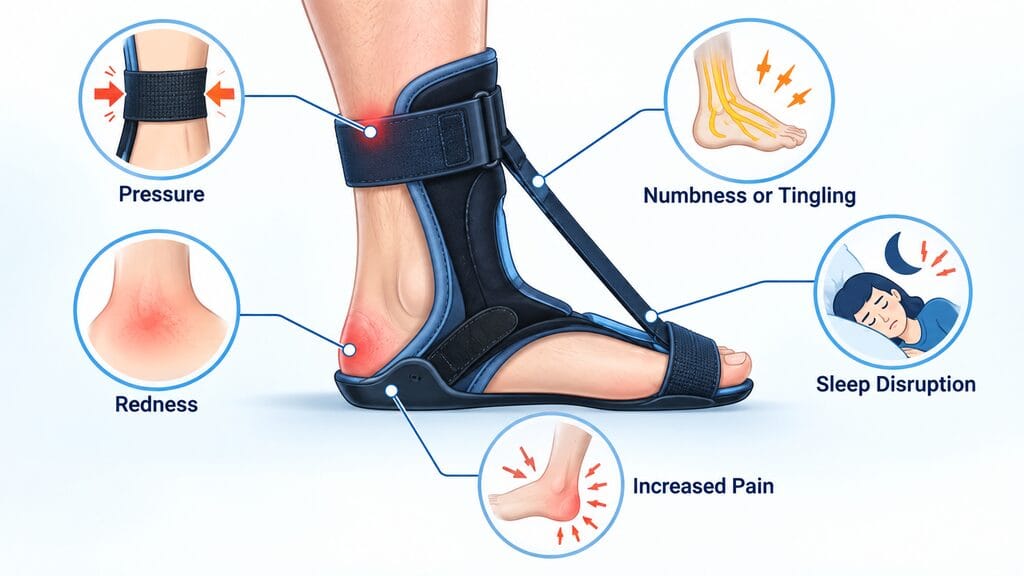
A poorly fitted or overly tight night splint may cause:
- Pressure from tight straps or hard parts
- Redness from rubbing, heat, or pressure
- Numbness or tingling from pressure on nerves or reduced circulation
- Sleep problems if the splint feels hot, heavy, or bulky
- Increased pain from stretching the foot or calf too far
People with diabetes, nerve damage, poor circulation, leg swelling, or sensitive skin should ask a podiatrist before using a night splint. They may not feel pressure or notice skin damage early.
Conclusion
Night splints are a game-changer for plantar fasciitis. Plantar fasciitis night splints keep your foot stretched, reduce pain, and promote healing. Whether you buy one or make your own, consistency is the key. Pair your splint with proper footwear and stretching exercises for the best results. Take control of your foot health today—you’ve got this!
FAQs
Yes, they stretch the plantar fascia overnight and reduce morning pain.
Using a night splint, along with stretches and supportive shoes, works best.
They are highly effective when used consistently over several weeks.
A combination of night splints, stretching, and ice therapy yields the best results.
Place heel fully inside, secure straps comfortably, set a gentle stretch, and loosen immediately if pain, numbness, or tingling occurs.