
How Foot Alignment Affects Knee Pain?
- Published by: Payam Sarraf
- on
- | Updated on April 17, 2025

If your knees hurt when you walk, stand, or just get out of bed 99% of the time, you might think the problem is your knees. But often, the real reason is your feet. At Foot and Ankle Specialty Centers, we see this all the time. When your feet aren’t lined up the right way, your knees work harder and start to ache. Let’s learn more about foot alignment and knee pain.
Table of Contents
ToggleThe Role of Foot Alignment in Knee Pain
Foot alignment and knee pain are directly connected. Your feet hold up your whole body. When they’re not in the right position, everything above them feels the pain, especially your knees. If your feet lean in, out, or roll too much, your knees move in ways they’re not supposed to. This puts pressure on the joints and muscles around them. Foot and ankle specialists say this can lead to ongoing knee pain, even if your knees are healthy over time.
The Effects of Foot Alignment on Knee Pain
As mentioned, the connection between foot alignment and knee pain happens when your feet are off, and your knees feel it. Here are all the ways that this happens.
Overpronation
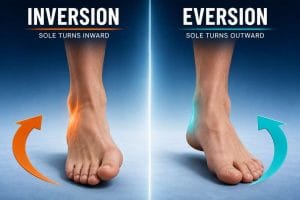
This means your feet roll too far inward when you walk. It’s very common, especially in people with flat feet. When your foot rolls in, your lower leg twists. This pulls on your knee joint and forces it to turn inward, too. Foot doctors Mesa say that this movement isn’t natural and it adds pressure to the inside of your knee. It can feel sore, tired, or even sharp after a long day.
Supination (Underpronation)
It’s the opposite of overpronation. Your foot rolls outward instead of inward. It often happens in people with high arches. When your feet do this, your weight shifts to the outside of your leg. This pulls your knees outward and makes them unstable. It can also throw off your balance. Your knees may start to feel pain on the outside or feel weak when you walk.
Uneven Leg Length
Sometimes, one leg is just a bit longer than the other. It can happen from birth or after an injury. Even a small difference changes the way you walk. One foot may flatten more or turn out. This makes your knees move differently on each side. Over time, this uneven movement can wear down the joint and create a connection between foot alignment and knee pain or stiffness.
Flat Feet
When you have flat feet, your arches are very low or don’t exist. That means your feet don’t support your body well. The middle part of your foot touches the ground more than it should. This makes your knees turn inward and puts stress on your joints. Podiatrists Gilbert say that people with flat feet often feel pain on the inside of their knees or in their hips, too.
High Arches
High arches can look nice, but they don’t work well for shock. Instead of spreading the impact when you walk, your foot sends the force straight up your leg. That pressure lands in your knees. Over time, this can lead to pain in the front of the knee or behind the kneecap. Some people even get pain just from standing too long.
Preventing and Managing Knee Pain from Foot Misalignment
You don’t have to live with foot alignment and knee pain. There are simple ways to protect your knees:
Wear Supportive Shoes
Choose shoes with a firm heel, cushioned sole, and strong arch support. Avoid flat sandals, flip-flops, or soft, unsupportive shoes. Make sure your shoes fit well, and don’t tilt your foot inward or outward.
Use Custom Orthotics
These are shoe inserts designed to correct your foot position. A podiatrist Chandler will check your foot alignment and knee pain (if you have any) and take a mold of your foot. You wear them daily inside your shoes to keep your foot stable and reduce strain on your knees.
Stretch Key Muscles Daily
Focus on calves, hamstrings, and the bottom of your feet. Use a wall to stretch your calves, a towel to pull your hamstring while lying down, and roll a ball under your foot to loosen the arch. Do each stretch slowly and hold for 20–30 seconds. Repeat twice a day, especially after walking or standing for long periods.
Strengthen Your Legs
Do exercises like wall sits, step-ups, and straight leg raises. Start with 10 reps of each, 2–3 times a week. These strengthen the muscles that support your knees and improve alignment. To get rid of foot alignment and knee pain correctly, focus on form, not speed. Stop any movement that causes pain.
Address Pain Early
If you feel pain in your knees or feet, don’t wait. Rest the area, apply ice for 15 minutes, and avoid high-impact activity. If the pain lasts more than a few days or gets worse, get checked. Early care prevents long-term damage.
Schedule an Exam with a Foot Doctor
Our foot doctors Scottsdale will examine your foot alignment and knee pain (if you have any), your gait, your foot structure, and test your range of motion. We may use imaging or pressure scans to find the cause of your pain. Based on what we find, we’ll guide you on orthotics, therapy, or other treatments that fix the issue at the source.
How These Misalignment Happens
- You’re born with it.
- Poor posture when walking or standing.
- Arches that are too flat or too high.
- Injuries to your feet, legs, or hips.
- Shoes with no support.
- Arthritis or joint problems.
- Aging! Our feet change over time.
Common Causes of Foot Misalignment
| Cause | Description |
| Flat feet | No arch, causes feet to roll in |
| High arches | Doesn’t absorb shock well |
| Plantar fasciitis | Pain in heel causes you to walk funny |
| Muscle imbalances | Weak legs or hips pull feet out of line |
| Poor footwear | Shoes don’t support proper foot position |
| Previous fractures | Bones heal out of place |
| Neuromuscular disease | Body movement is affected |
Foot Alignment and Knee Pain Treatments in Phoenix, Arizona
We know bad foot alignment and knee pain can slow you down. Our team at Foot and Ankle Specialty Centers looks at how your feet, legs, and knees work together. Our foot specialists Phoenix use tools like custom orthotics, advanced imaging, and foot exams to find the problem fast. You’ll get a personal treatment plan to fix the alignment, ease the pain, and get you moving again.
We’re ready to help! Call us today or book your visit online.
Let’s Recap
Bad foot alignment and knee pain are directly connected. Misalignment can cause real, lasting pain, but it doesn’t have to. With the right care, you can get back on your feet and live without pain. We’re here to help you every step of the way.
FAQs
Can foot misalignment cause knee pain?
Yes, it can. It changes how your legs move and adds pressure to your knees.
Can bad foot posture cause knee pain?
Definitely, it can push your knees into strange positions that hurt over time.
What part of the foot affects the knee?
Mostly the arch and heel. They control how your legs move when you walk.

Payam Sarraf
Payam Sarraf, DPM, is a podiatry specialist and surgeon at Foot + Ankle Specialty Centers, with offices in Gilbert, Scottsdale, Chandler, and Phoenix, Arizona. Dr. Sarraf’s areas of expertise include ankle trauma, Achilles tendon ruptures, podopediatrics, ankle arthroscopy and reconstruction and biomechanics.
Related posts
- Payam Sarraf
- September 3, 2026
- No Comments
Toe curling happens when your toes bend downward and inward toward the bottom of your foot. Common causes include muscle spasms, nerve problems, dystonia, toe deformities, […]

- Payam Sarraf
- August 29, 2026
- No Comments
Cracked heels develop when dry, thick skin splits under pressure from standing or walking. To help them heal, soak your feet, exfoliate the dry skin, moisturize […]
- Payam Sarraf
- August 29, 2026
- No Comments
High heels can cause a forward weight shift, which puts extra pressure on your toes and the front of your feet. A narrow toe box may […]