

Diabetes may lead to itchy feet through dry skin, nerve changes, poor circulation, or a higher risk of infection. Relief depends on the cause. Keep your feet clean and dry, moisturize dry skin but skip the area between your toes, and contact a podiatrist if you notice a wound, redness, warmth, swelling, discharge, or itching that does not improve. Below, Foot + Ankle Specialty Centers explains why itchy feet diabetes happens, what the itch might mean, and how to find safe relief.
Table of Contents
ToggleCan Diabetes Cause Itchy Feet?
Diabetes and itchy feet often show up together. High blood sugar can dry out your skin and affect the nerves and blood vessels in your feet, and either change can lead to itching. If it lasts more than a few days or keeps coming back, mention it to your doctor.
Itching can feel worse at night because you notice it more once you are lying still with nothing to distract you. Nerve pain from diabetes is also commonly worse after dark, so itchy feet at night is not unusual.
Why Do Your Feet Itch When You Have Diabetes?
Itchy feet happen a lot in people with diabetes. The cause is not the same for everyone. Each cause needs its own care. Here are some common causes of itchy feet diabetes:
Cause | What Happens |
Dry skin | High blood sugar dries out your skin. Your feet may become dry, rough, or cracked. |
Nerve changes | High blood sugar can damage the small nerves in your feet. The itching may come with tingling, burning, or numbness. |
Poor circulation | Reduced blood flow makes the skin dry and slows healing. Both can make itching worse. |
People with diabetes are more likely to get this fungal infection. It often appears between the toes or on the sole. | |
Irritation | Socks, shoes, soaps, or lotions can irritate your skin. This may not be related to blood sugar. |
Infection | A break in the skin can become infected. The area may itch and look red, warm, or swollen. |
What Does the Location of the Itch Mean?
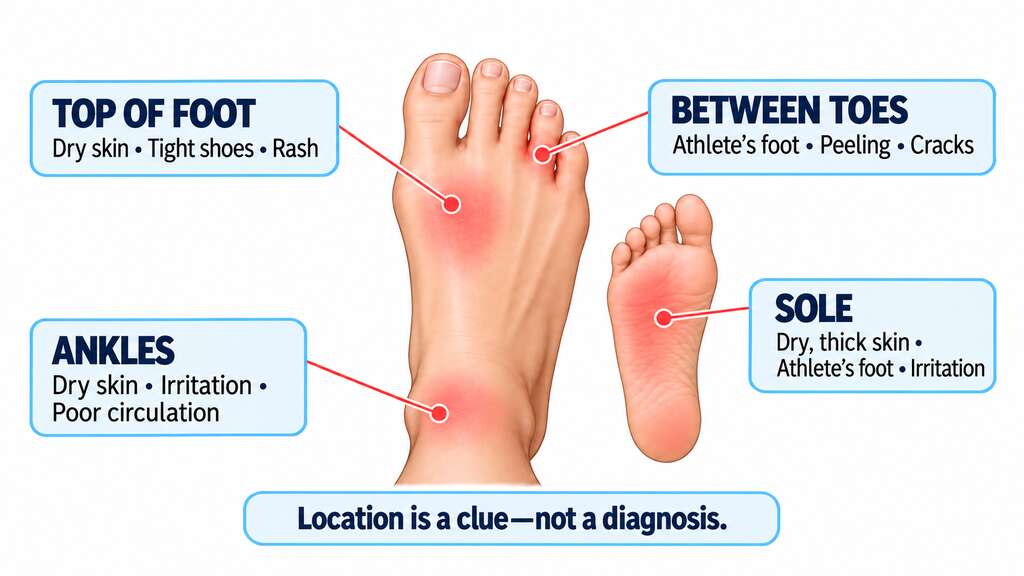
Where the itch shows up can give you a clue, but it does not tell you the exact cause.
Here are some common spots and what they may mean.
- The top of the foot often itches from dry skin, tight shoes, or a mild rash.
- Itchy foot bottom results from dry, thick skin, athlete’s foot, or irritation.
- The skin between the toes often itches from athlete’s foot, especially if it looks wet, peeling, or cracked.
- Itchy ankles often come from dry skin, sock or shoe irritation, or poor circulation.
These clues can overlap. A podiatrist can help you find the real cause if the itch does not go away on its own.
How to Stop Diabetic Foot Itching?
The right care depends on what is causing your itch. Some steps help with dry skin, others help with an infection, so it helps to match the care to the cause. Here are some ways to manage diabetic foot care and ease itchy feet in diabetes.
Watch Your Blood Sugar
High blood sugar can worsen skin issues, so it’s important to manage your diabetes effectively. You need to constantly monitor your glucose levels and follow your prescribed treatment plan to prevent the complications that lead to itching.
Managing your diet can also support healthy circulation and fluid balance. Learn more about “foods that reduce swelling in feet and ankles” that may help support overall foot health.
Moisturize Regularly
Keep your feet hydrated using moisturizer specifically designed for diabetic skin. Since your dry skin can crack and itch, applying a good moisturizer daily is of the essence to help you maintain skin elasticity and moisture. Look for products with ingredients like urea or lactic acid, which are known to enhance skin hydration.
Wear Comfortable Footwear
Proper footwear is essential for improving circulation and reducing irritation. Go for shoes that fit well, provide good support, and allow your feet to breathe. Stay away from tight shoes or high heels, which can constrict blood flow and cause blisters or calluses that may lead to itching.
Practice Good Foot Hygiene
Wash your feet daily with lukewarm water and mild soap, then dry them thoroughly, especially the area between your itchy toes. Regularly check for any signs of infection, injury, or changes in your feet. Trim your toenails carefully and consider professional foot care if you have difficulty.
Use Medicated Creams
If itchy feet are due to fungal infections or inflammation, over-the-counter antifungal or corticosteroid creams can be helpful. Antifungal creams can treat conditions like athlete’s foot, while corticosteroid creams can reduce inflammation and itching. Always follow your foot doctor’s directions and talk to our doctors before using new medications.
When to Contact a Podiatrist
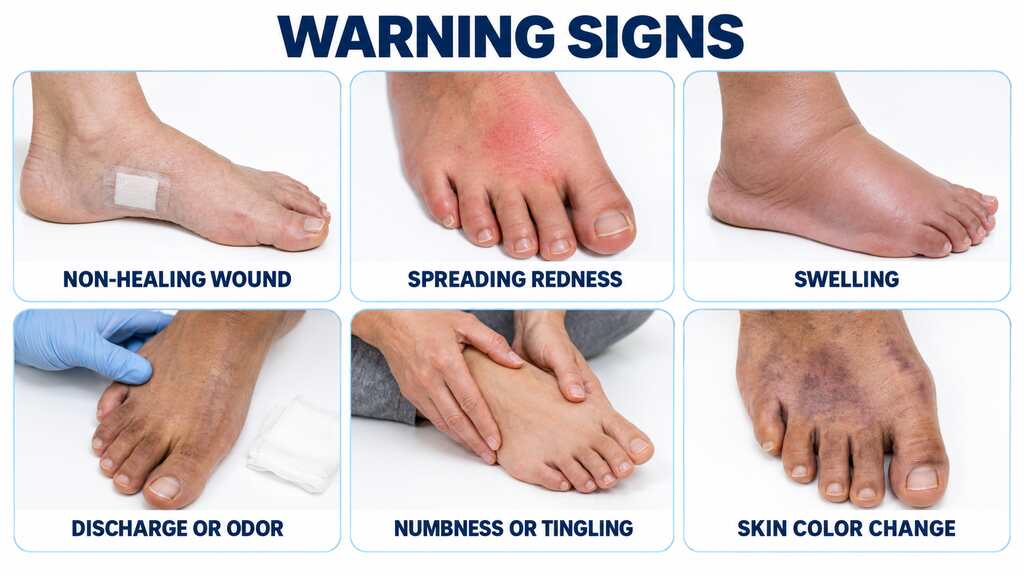
Call a podiatrist promptly if you notice any of the following along with itching:
- A wound, cut, or crack that is not healing
- Redness that is spreading or warmth around a sore area
- Swelling in the foot or ankle
- Discharge or an unusual odor
- Numbness, tingling, or a change in how your foot feels
- A change in skin color on the foot. (Learn more about skin discoloration on feet and ankles and what it may mean.)
These signs can point to an infection or a foot problem that needs medical care, and catching them early makes treatment easier.
Final Thoughts
Itchy feet diabetes symptoms usually come from dry skin, nerve changes, poor circulation, or a fungal infection, and the right relief depends on which one applies to you. Simple daily habits, like moisturizing correctly and checking your feet, help with most cases.
If the itching does not improve, or you notice any warning signs, our team at Foot + Ankle Specialty Centers can take a closer look and help you find lasting relief. Call us at 480-812-3668 or schedule an appointment online at one of our five Phoenix-area locations.
FAQs
Wash your feet, then moisturize the top and bottom only. Wear soft socks to bed, avoid scratching, and keep your room a bit cooler. See a podiatrist if it does not stop.
Not always. Itching can feel worse at night simply because you notice it more. Itchy feet and diabetes are often linked, but dry skin, allergies, or infections can cause it too.
Wash and dry your feet gently, moisturize the top and bottom (not between the toes), and avoid scratching. See a podiatrist if the itch persists or you notice a wound.
This is often linked to dry skin or irritation from shoes or socks, though a podiatrist can check for other causes if it does not clear up.
Dry, thickened skin and athlete’s foot are common causes on the sole. A podiatrist can help identify the exact cause and safe treatment for deep itch on bottom of foot.
Diabetic itching feels like a constant, nagging irritation on your skin, especially on your feet and legs. It might start as a mild tickle but can get worse over time.
Diabetes itching ankles can occur with diabetes, often from dry skin or poor circulation, but itching alone does not confirm diabetes.










2 Comments
Well, my feet still be itchy if I am prediabetic
Yes, itchy feet can be a symptom of prediabetes, though it’s more common in people with diabetes. High blood sugar levels can cause dry skin, poor circulation, and nerve changes, leading to itching. Other possible causes include fungal infections, eczema, or an allergic reaction. If your feet are frequently itchy, it’s a good idea to check your blood sugar levels and see a doctor to rule out any underlying issues. Keeping your skin moisturized and avoiding harsh soaps can also help!
If the itching persists or worsens, a podiatrist can help determine the cause and recommend the best treatment.