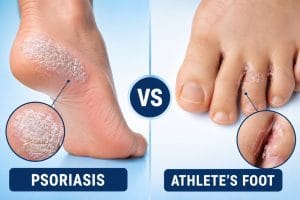

Topical terbinafine is often the strongest treatment for athlete’s foot at home. This over-the-counter medicine kills the fungus that causes the infection. Athlete’s foot can make the skin itch, burn, and peel, mainly between the toes.
The fungus grows in warm, wet places like sweaty socks, locker rooms, and public showers. You can treat many mild cases at home with the right antifungal medicine. Below, Foot + Ankle Specialty Centers explains the best treatments and how to use them safely.
Table of Contents
ToggleWhat is the Strongest Treatment for Athlete’s Foot at Home?
Topical terbinafine is often a leading treatment for mild athlete’s foot. It kills the fungus instead of only slowing its growth. According to Mayo Clinic, terbinafine is a highly effective over-the-counter antifungal treatment. However, it may not work for every infection. If your symptoms do not improve within one to two weeks, seek professional help for the most effective foot fungus treatment.
Other Home Remedies for Athlete’s Foot
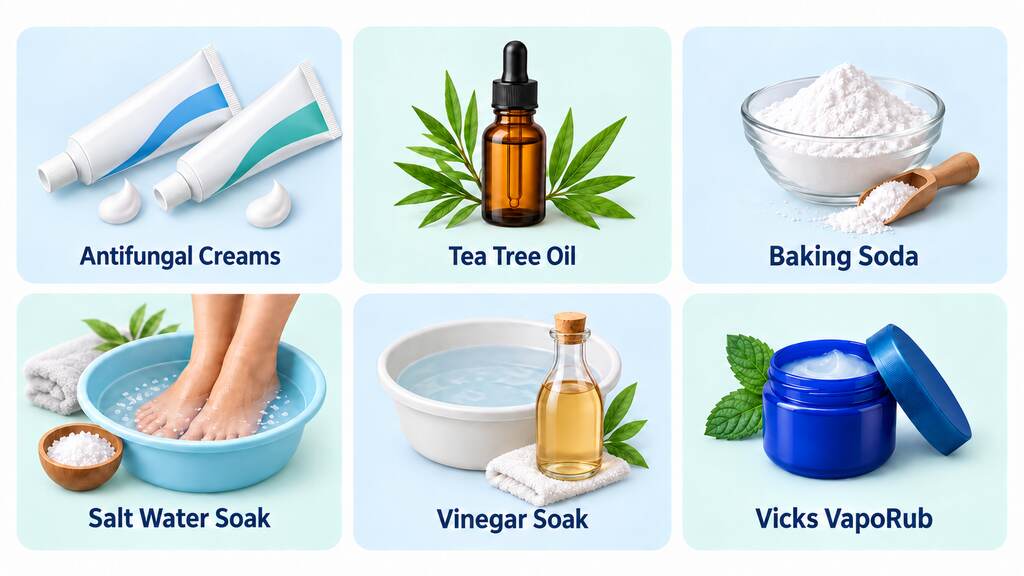
You can try other treatments for mild athlete’s foot. Antifungal medicines offer the strongest support. Natural home remedies have limited evidence and cannot replace antifungal medicine. Here’s what to know about the most common home remedies:
Clotrimazole and Miconazole Creams
These are athlete’s foot creams you can buy at the drugstore. They help fight the same fungus that causes athlete’s foot. They work well for mild cases, but they usually take longer to clear the infection than terbinafine. You need to use them every day for at least 2 to 4 weeks. Keep using the cream even after the itching stops.
Tea Tree Oil
Tea tree oil is a natural athlete’s foot treatment at home with its antifungal and antibacterial properties. Some people find it helps reduce itching, burning, and foot odor. But it doesn’t work for everyone. Always mix it with another oil, like olive oil or coconut oil, before putting it on your skin. Use it twice a day, but stop if your skin feels irritated.
Baking Soda
This athlete’s foot treatment doesn’t kill the fungus, but it helps in other ways. It keeps your feet dry and can help reduce bad smells. You can sprinkle baking soda in your shoes every day, or you can soak your feet in warm water with 2 tablespoons of baking soda for 15 to 20 minutes.
Salt Water Soaks
Salt has a drying effect and can help reduce swelling, blisters, and irritation. Soaking your feet in warm salt water may give you some relief, especially if your skin is raw or cracked. But salt water does not kill the fungus, so this should only be used to feel better—not as your main treatment.
Vinegar Soaks
Vinegar is acidic, which makes it hard for fungi to grow. Try mixing 1 part vinegar with 2 parts warm water and soak your feet for 15 to 20 minutes once a day. This treatment may help with itching, peeling, and odor. But like salt water, vinegar won’t fully cure athlete’s foot. It works best when used with an antifungal cream.
Vicks VapoRub
Some people use Vicks because it contains menthol, eucalyptus, and camphor, which feel cool and help reduce itching. It may help with symptoms and slow down the fungus a little, but it’s not a proven cure. If you try it, apply a small amount to the area once or twice a day, but don’t rely on it as your only treatment.
When Home Treatment Is Not Enough
Severe, repeated, or stubborn infections may need prescription cream or oral medicine. A podiatrist will choose the best medication for athlete’s foot based on your infection and the treatments you have already tried.
Treatment | Type | When It May Help |
Ciclopirox | Prescription cream or gel | May help when OTC creams do not clear the infection |
Econazole | Prescription cream | May treat stubborn fungal infections on the skin |
Ketoconazole | Prescription cream | May help with red, itchy, or peeling skin caused by fungus |
Naftifine | Prescription cream or gel | Kills fungus and may also reduce skin irritation |
Itraconazole | Oral medicine | May help when other treatments do not work |
Oral antifungal medicines can cause side effects. A doctor must examine you before treatment and monitor your health while you take them
How to Prevent Spreading Athlete’s Foot?
Athlete’s foot can spread to your other foot, other parts of your body, or other people. Follow these steps to lower the risk:
- Wash your feet every day and dry them well, especially between your toes.
- Change your socks every day and whenever they become damp.
- Wear breathable shoes that allow air to reach your feet.
- Rotate your shoes and let each pair dry fully before you wear it again.
- Wear sandals in public showers, pools, and locker rooms.
- Clean shared showers and bathroom floors often.
- Use an antifungal spray or powder in your footwear as directed.
- Do not share towels, socks, shoes, or sandals.
- Wash your hands after touching your feet or applying antifungal cream.
These steps help stop the fungus from spreading, but they do not replace treatment.
When To See Our Podiatrists?
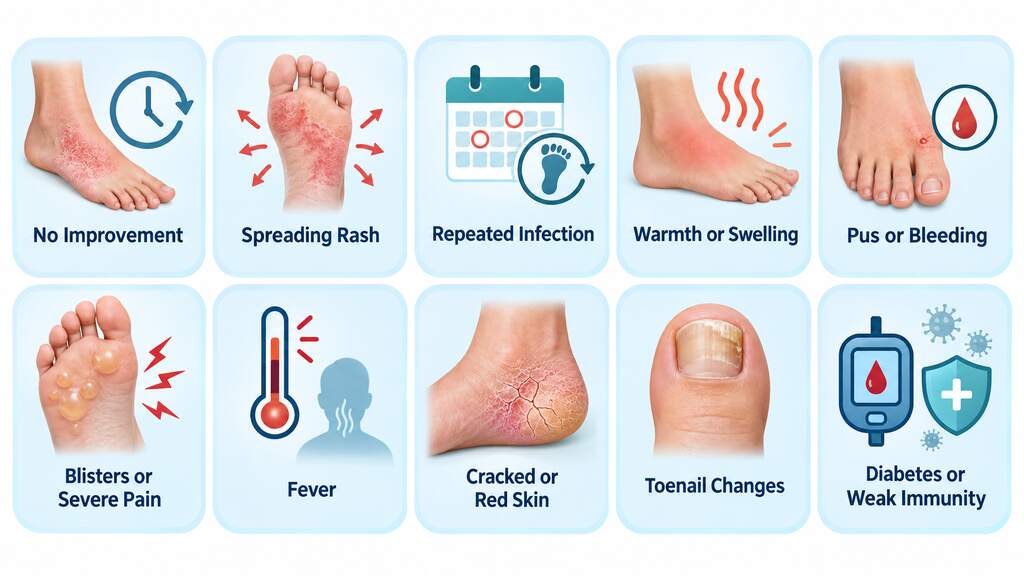
Home treatment may not clear every case of athlete’s foot. Contact our podiatrists if you notice these warning athlete’s foot symptoms:
- An OTC treatment does not improve your symptoms.
- The rash gets worse or spreads.
- The infection keeps coming back.
- Your skin feels warm or looks swollen.
- You notice pus, bleeding, blisters, or severe pain.
- You develop a fever.
- Your skin cracks or becomes very red and sore.
- Your toenails become thick, yellow, brittle, or discolored.
- You have diabetes or a weak immune system.
Foot + Ankle Specialty Centers serves patients in Phoenix, Chandler, Gilbert, Mesa, and Scottsdale. Our podiatrists can find the cause of your symptoms and create the right treatment plan for you. Contact us today to schedule an appointment.
Key Takeaway
Topical terbinafine is often the strongest treatment for athlete’s foot at home for mild cases. It kills the fungus that causes the infection. Home remedies may ease symptoms, but they cannot replace antifungal medicine. See a podiatrist if the infection becomes severe, returns often, or does not improve.
FAQs
Baking soda helps keep feet dry and reduce odor. It doesn’t kill the fungus but may help with symptoms.
Salt water may soothe the skin but doesn’t treat the infection. It can help dry blisters or sores.
No. It may ease itching, but it won’t kill the fungus. Use antifungal cream for real treatment.
Use antifungal cream like terbinafine. Wash and dry your feet every day. Don’t share socks or shoes.
Apply terbinafine cream daily. Keep your feet clean and dry. Most people feel better in a few days.
Terbinafine cream is often a leading choice for mild athlete’s foot because it kills the fungus causing the infection quickly.