
How to Cure Plantar Fasciitis in One Week in Phoenix?
- Published by: Payam Sarraf
- on
- | Updated on March 6, 2026
If your first step out of bed feels like stepping on a nail, or if you feel sharp heel pain every morning, you may have plantar fasciitis. This cause of heel pain is really common, with about two million Americans treated for it each year. Many patients ask me the same question: How to cure plantar fasciitis in Phoenix in one week?
Here is the honest answer. If your case is mild and you start treatment early, you can see major relief in seven days. If your case is more advanced, full healing may take a few weeks. The key is starting the right treatment right away.
At Foot & Ankle Specialty Centers, we treat plantar fasciitis every day in our Phoenix, Scottsdale, Chandler, Mesa, and Gilbert offices. Let’s walk through what works to cure plantar fasciitis heel pain in one week.
Table of Contents
ToggleWhat Is Plantar Fasciitis, and Why Does It Hurt So Much?
Before we say how to cure plantar fasciitis in Phoenix in one week, let’s get to know it fast. The plantar fascia is a thick band of tissue on the bottom of your foot. It connects your heel to your toes and supports your arch. When it is overworked, small tears form. This leads to inflammation and heel pain. Pain is usually:- Sharp or stabbing
- Felt at the bottom of the heel
- Worst with the first steps in the morning
- Worse after resting or sitting
Is It Really Possible to Cure Plantar Fasciitis in One Week?
The short answer is: it depends on the severity and how quickly you act. About 90% of people with plantar fasciitis get better with simple, non-surgical treatment. But recovery time is different for everyone.- Mild cases caught early can improve within a week if you rest, stretch daily, ice the heel, and wear supportive shoes.
- More severe or long-lasting cases, especially if you have flat feet or have ignored the pain for months, usually need professional treatment and more time to heal.
How to Cure Plantar Fasciitis in One Week: Your Day-by-Day Action Plan
Here is the fastest way to cure plantar fasciitis in Phoenix in one week. If you’re not seeing improvement by Day 4 or 5, that’s your signal to call a podiatrist.Days 1–2: Rest, Ice, and Calm the Inflammation
Your first goal is to stop making the injury worse. Avoid high-impact activities like running, jumping, or long walks on hard surfaces. Choose low-impact options like swimming or cycling instead. Remember to ice your heel for 15–20 minutes, two to three times a day. Always wrap the ice in a cloth. Do not walk barefoot. Not even at home. Wear supportive shoes or orthopedic slippers at all times, even for short trips around the house.Days 2–7: Stretching Plan
To cure plantar fasciitis in Phoenix in one week, stretching your calf muscles is effective. Tight calves pull on the Achilles tendon and heel, which increases stress on the plantar fascia. Do these stretches two to three times a day:- Wall calf stretch: Stand facing a wall. Place the sore foot behind you with the heel flat. Lean forward and hold for 30 seconds with the back knee straight. Then bend the back knee slightly and hold again to stretch deeper muscles.
- Towel stretch (before getting out of bed): Loop a towel or belt around the ball of your foot. Keep your leg straight and gently pull your toes toward you. Hold for 30 seconds. This helps loosen the fascia before your first steps.
- Toe curls: Place a towel on the floor and use your toes to scrunch it toward you. This strengthens the small foot muscles that support the arch.
Nights 1–7: Wear a Night Splint
To cure plantar fasciitis in Phoenix in one week, you need to use night splints. Plantar fasciitis hurts most in the morning because the fascia tightens overnight. When you take your first step, it suddenly stretches and causes pain. A night splint keeps your foot at a 90-degree angle while you sleep. This keeps the fascia gently stretched. Many patients notice less morning pain within a few nights.During All 7 Days
Wear supportive shoes and orthotics. Shoes play a major role in healing. Choose shoes with strong arch support, a cushioned heel, and a secure fit. Good shoes reduce strain on the fascia with every step. Over-the-counter inserts can help mild cases. If you have flat feet or high arches, custom orthotics provide better support because they are made specifically for your foot shape.Why Plantar Fasciitis Is So Common in Phoenix
Plantar fasciitis is especially common in Phoenix because of our environment and lifestyle. The Valley creates daily stress on your feet.- Concrete and tile are everywhere. They absorb very little shock, which increases heel stress.
- Most sandals have no arch support. This strains the plantar fascia.
- Cooler months bring more hiking and running. Quick jumps in activity overload the heel.
- Heat and dehydration can increase inflammation and make tissue easier to injure.
Why Choose Foot + Ankle Specialty Centers for Plantar Fasciitis
Foot + Ankle Specialty Centers is a trusted Phoenix-area podiatry practice with five Valley locations and board-certified foot specialists focused on fast, effective relief. We offer:- Same-day and next-day appointments
- On-site custom orthotics
- Advanced shockwave therapy (no surgery, no downtime)
- Surgical expertise if needed
- 4.9 Google rating
- Most major insurance plans are accepted
FAQs
How to cure plantar fasciitis fast?
The fastest way is to combine treatments at the same time: rest, ice, daily calf stretching, a night splint, and supportive shoes. If pain does not improve within 1–2 weeks, professional treatments like custom orthotics or shockwave therapy can speed recovery.
Can walking reduce plantar fasciitis?
Light walking in supportive shoes may be okay. But long walks, barefoot walking, or walking on hard surfaces can make it worse. During flare-ups, reduce activity and avoid high impact.
Can plantar fasciitis really be cured in one week?
You can cure plantar fasciitis in Phoenix in one week, but only for Mild, early cases and with aggressive treatment. Chronic or severe cases usually take several weeks and may need professional care.
What should I avoid doing when I have plantar fasciitis?
Avoid walking barefoot, wearing flat sandals or flip-flops, running, jumping, and ignoring the pain. Also, avoid aggressive rolling of the heel if it increases discomfort.
When should I see a doctor for plantar fasciitis?
See a podiatrist if pain lasts more than two weeks, limits daily activity, worsens suddenly, or does not improve with home care
Does plantar fasciitis go away on its own without treatment?
It can, but it may take many months. Without treatment, the pain often lingers and can lead to knee, hip, or back problems from limping.

Payam Sarraf
Payam Sarraf, DPM, is a podiatry specialist and surgeon at Foot + Ankle Specialty Centers, with offices in Gilbert, Scottsdale, Chandler, and Phoenix, Arizona. Dr. Sarraf’s areas of expertise include ankle trauma, Achilles tendon ruptures, podopediatrics, ankle arthroscopy and reconstruction and biomechanics.
Related posts
- Payam Sarraf
- September 3, 2026
- No Comments
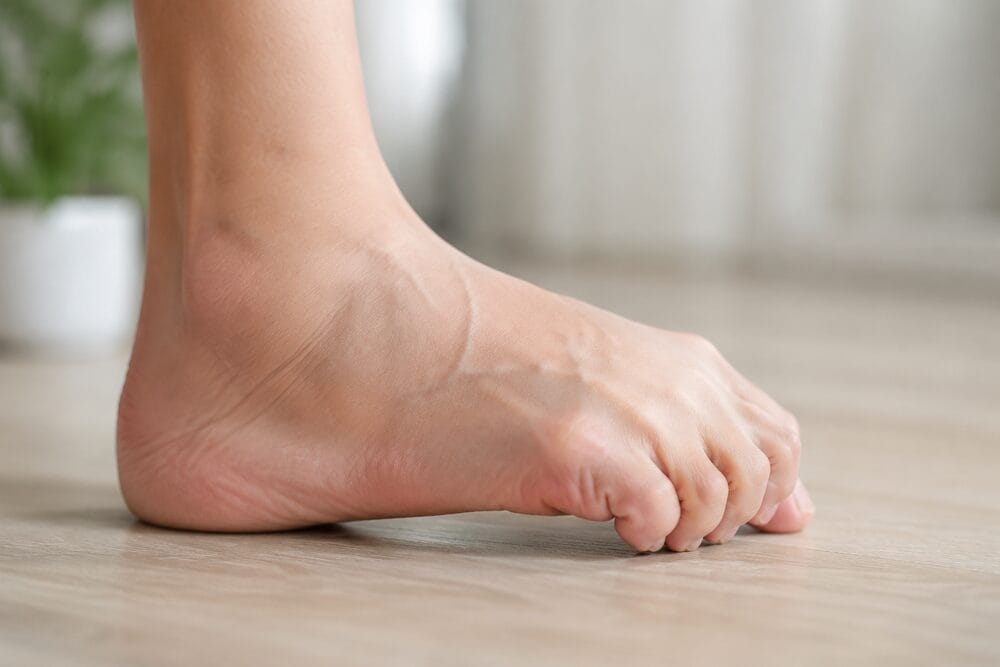
Toe curling happens when your toes bend downward and inward toward the bottom of your foot. Common causes include muscle spasms, nerve problems, dystonia, toe deformities, […]

- Payam Sarraf
- August 29, 2026
- No Comments
Cracked heels develop when dry, thick skin splits under pressure from standing or walking. To help them heal, soak your feet, exfoliate the dry skin, moisturize […]

- Payam Sarraf
- August 29, 2026
- No Comments
High heels can cause a forward weight shift, which puts extra pressure on your toes and the front of your feet. A narrow toe box may […]