









Red, Swollen Toe? How to Know If It’s an Ingrown Toenail in Phoenix
- Published by: Payam Sarraf
- on
- | Updated on February 24, 2026
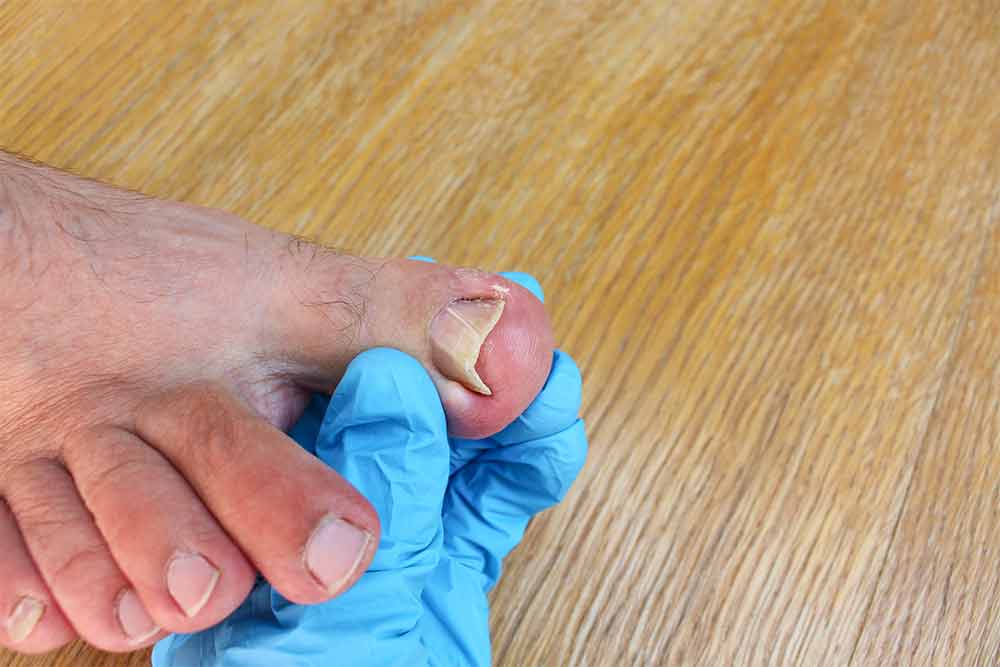
If you have a red, swollen toe and are wondering if it’s an ingrown toenail, you’re not the only one. Many people get pain, tenderness, and swelling when the edge of a toenail grows into the skin. An ingrown nail most often affects the big toe and can become sore or infected if not treated. Ingrown nails can happen from tight shoes, trimming nails too short, trauma to the toe, or even nail shape.
Join Foot and Ankle Specialty Centers in Phoenix to learn the signs and symptoms to avoid complications like infection or chronic pain.
Table of Contents
ToggleWhat Does an Ingrown Toenail Look Like?
Ingrown types often look different from normal toenails. Here are ingrown toenail symptoms you need to keep an eye on:
- Redness around the edge of the nail.
- Swelling of the skin next to the toenail.
- A curved or bent nail edge that seems to press into the skin.
- The skin next to the nail may look shiny or tight.
- Warm skin around the area if irritation or early infection is present.
- Sometimes you see fluid or pus at the side of the nail if it’s infected.
An ingrown nail doesn’t always look the same for every person. Some may have mild redness, while others have more intense swelling or even drainage. Watching for changes in shape, color, and swelling can help you know if it’s an ingrown nail.
How to Tell If It’s an Ingrown Toenail?
To know if it’s an ingrown toenail, pay attention to symptoms like:
Pain or throbbing on one or both sides of the nail
This is often the first sign. The pain can feel sharp, aching, or pulsing. It usually gets worse after wearing tight shoes or walking for long periods.
Tenderness along the nail border
Lightly pressing the skin next to the nail may feel sore or sensitive. Even a gentle touch or bump from a blanket can cause discomfort.
Redness and swelling of the surrounding skin
The skin may appear red, slightly raised, and inflamed. As the nail continues to press into the skin, swelling can increase. The toe may also feel warm to the touch.
Tight, stretched skin near the nail edge
This can happen as swelling builds and the nail digs deeper into the soft tissue.
Pain from footwear or socks
Shoes that push the nail inward can worsen symptoms. Even soft shoes may feel uncomfortable, especially if the toe is already irritated.
Increased pain with walking, standing, or toe flexing
Activities that place pressure on the toe often increase discomfort. If the ingrown nail is progressing, simple movements can feel painful.
Hardening of skin (granulation tissue)
In more advanced cases, the skin beside the nail may develop thick, red tissue that bleeds easily. This is a sign the body is reacting to ongoing pressure.
Signs of infection
If left untreated, the area can become infected. Look for:
- Pus or yellow/white fluid draining from the side of the nail
- Foul odor
- Spreading redness or warmth
- Fever or chills (in severe cases)
These symptoms occur because the nail has grown into or under the skin, irritating the tissue and causing inflammation. Early signs may be mild, but if left untreated, they can deepen and lead to infection.
If you experience these symptoms, contact our Phoenix podiatrists at Foot and Ankle Specialty Centers to get expert care.

At-Home Tests to Know If It’s an Ingrown Toenail
| Test | What to Look For |
| Visual check | Redness, swelling, or the nail edge growing into the skin |
| Gentle touch test | Light pressure around the nail causes pain or tenderness |
| Compare toes | One toe looks more swollen or red than the others |
| Pus check | Yellow or white fluid draining from the side of the nail |
| Pressure test | Pain even in loose shoes, and worse with pressure |
These checks won’t replace a professional evaluation, but can help you understand your symptoms. If you’re uncertain and really want to know if it’s an ingrown toenail, a Phoenix foot doctor can confirm what’s going on.
How is an Ingrown Toenail Diagnosed?
If you visit a podiatrist to find out if it’s an ingrown toenail, the exam is quick, simple, and usually painless. Here is what typically happens during the appointment:
- Your foot doctor will ask when the pain started, what makes it worse, and if you have noticed swelling, drainage, or infection.
- Your doctor will carefully look at the nail and surrounding skin to see where the nail edge is growing and how deeply it is pressing into the skin.
- Light pressure may be applied around the nail to check for tenderness, swelling, warmth, or fluid. This helps determine the severity.
- Your podiatrist will look for pus, bleeding tissue, spreading redness, or overgrown skin next to the nail.
- They will evaluate if the nail is curved, thickened, or growing abnormally, which can cause repeated ingrown nails.
- If you have diabetes, poor circulation, or nerve problems, your doctor will assess healing risk and check blood flow and skin condition.
In most cases, no X-rays or lab tests are needed. The diagnosis is made based on the appearance of the toe and your symptoms. The doctor will then explain your stage of the condition and recommend the best treatment.
When to See a Doctor in Phoenix for an Ingrown Toenail
If you’re unsure if it’s an ingrown toenail or if your symptoms worsen, it’s important to get expert care. Consider seeing a doctor in Phoenix if:
- The pain is severe or gets worse over time.
- You notice pus, drainage, or foul smell.
- There is significant redness or swelling that spreads.
- You have diabetes, poor circulation, or nerve issues.
- Home care doesn’t help after several days.
- Walking and daily activities become difficult.
Professional Diagnosis and Ingrown Toenail Treatment in Phoenix, AZ
If you’re unsure if it’s an ingrown toenail, don’t wait for it to get worse. Early care can prevent infection, relieve pain, and stop the nail from growing deeper into the skin. A podiatrist can confirm the problem, explain your treatment options, and help you heal faster and safer than trying home remedies alone.
At Foot and Ankle Specialty Centers, Dr. Payam Sarraf, DPM, and our other doctors help patients understand what’s really going on with their toes and diagnose them correctly. Whether it’s an ingrown nail or another foot issue, our expert podiatrists will give you the best ingrown toenail treatment in Phoenix.
We’re accepting new patients now, with affordable care and convenient offices in Phoenix, Gilbert, Chandler, Mesa, and Scottsdale, all with a 4.8-star rating on Google.
Call us at 480-812-3668 or request your appointment online today.
FAQs
How do I check if I have an ingrown nail?
To know if it’s an ingrown toenail, look for pain along the nail edge, redness, swelling, and tenderness. Compare with nearby toes and see if pressure or shoes make it worse.
What can be mistaken for an ingrown nail?
Conditions like paronychia (skin infection around the nail) or fungal nail infections can look similar but may cause broader changes like thickened or discolored nails.
What does a stage 1 ingrown toenail look like?
A mild (stage 1) ingrown toenail may have slight redness, tenderness, and mild swelling at the nail border without severe pain or infection.
- 1

Payam Sarraf
Payam Sarraf, DPM, is a podiatry specialist and surgeon at Foot + Ankle Specialty Centers, with offices in Gilbert, Scottsdale, Chandler, and Phoenix, Arizona. Dr. Sarraf’s areas of expertise include ankle trauma, Achilles tendon ruptures, podopediatrics, ankle arthroscopy and reconstruction and biomechanics.
Related posts

- Payam Sarraf
- September 3, 2026
- No Comments
Toe curling happens when your toes bend downward and inward toward the bottom of your foot. Common causes include muscle spasms, nerve problems, dystonia, toe deformities, […]

- Payam Sarraf
- August 29, 2026
- No Comments
Cracked heels develop when dry, thick skin splits under pressure from standing or walking. To help them heal, soak your feet, exfoliate the dry skin, moisturize […]

- Payam Sarraf
- August 29, 2026
- No Comments
High heels can cause a forward weight shift, which puts extra pressure on your toes and the front of your feet. A narrow toe box may […]