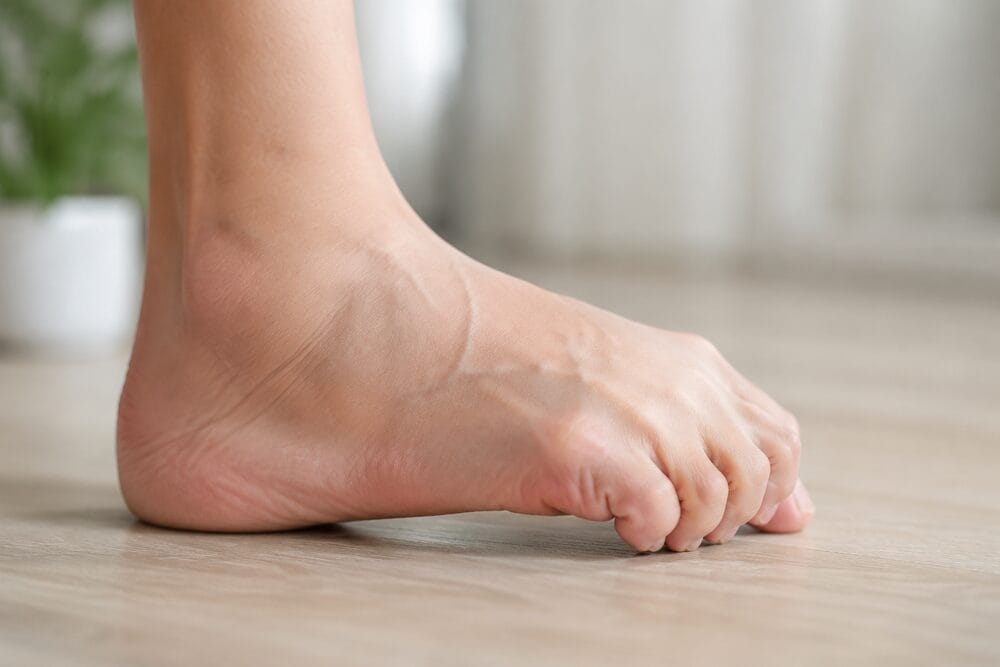

What Are Morton’s Neuroma Exercises?

Some foot pain feels like stepping on a stone. This may mean a nerve in your foot is irritated. This is called Morton’s neuroma. If left untreated, the pain can get worse. Here, we show you all the Morton’s neuroma exercises that reduce pain, relax your foot, and make it stronger.
Stretching Exercises
Stretching helps reduce tightness in the foot and calf. It also takes pressure off the irritated nerve and improves movement in your foot. Below are the most practical stretching exercises for Morton’s neuroma.
Toe Spreads
This exercise helps loosen tight muscles and gives more space between your toes. It also reduces nerve pressure. To do it:
- Sit with your feet flat on the floor.
- Spread your toes as wide as you can.
- Hold for 5 seconds, then relax.
- Repeat 10 to 20 times.
Standing Big Toe Stretches
This stretch helps your big toe and the muscles around it move better. It eases pressure in the front of the foot. To do it:
- Stand with one foot back behind you.
- Keep your heel up and bend your front knee.
- Feel a stretch in the base of your big toe.
- Hold for 30 seconds and repeat 5 to 7 times.
Standing Calf Stretch
This stretch works on your calf. It helps take pressure off the front of your foot. To do it:
- Stand with one leg behind you.
- Keep the heel down and bend the front knee.
- Feel a pull in your back leg’s calf.
- Hold for 30 seconds.
- Repeat 3 times per leg.
Strengthening Exercises
Strengthening exercises support the foot muscles. They help reduce strain on the nerve and improve foot stability. Below, we tell you the most effective ones.

Towel Curls
This exercise strengthens the small muscles in your toes and arch. It supports the front of the foot. To do it:
- Sit on a chair with your foot on a towel.
- Use your toes to pull the towel toward you.
- Push it back to the start.
- Repeat 10 to 15 times.
Tibialis Posterior Strengthening
This exercise helps support your arch and takes stress off the nerve. To do it:
- Sit down and loop a band under your foot.
- Hold the band and push your foot down and in.
- Return to the start slowly.
- Repeat 10 to 15 times per foot.
Marble Pick-Ups
This exercise strengthens your toes and helps with foot control. It also improves grip and balance. To do it:
- Place marbles on the floor.
- Pick them up using your toes.
- Drop them into a bowl.
- Repeat until you pick up all the marbles.
Balance Exercises
Balance exercises improve how your foot controls movement. They help spread your body weight evenly and prevent injury. Let’s see the most useful balance exercises:
Single-Leg Balances
This improves ankle control and makes the foot muscles work harder to support you. To do it:
- Stand near a wall or chair.
- Lift one foot and balance on the other.
- Hold for 30 to 60 seconds.
- Repeat 3 to 5 times per leg.
Heel-to-Toe Walk
This exercise trains your foot to handle pressure better and improves control. To do it, you need to:
- Walk in a straight line.
- Place the heel of one foot directly in front of the other foot’s toes.
- Take slow, steady steps.
- Do 10 to 15 steps forward and back.
Toe Raises with Eyes Closed
This helps improve strength, balance, and nerve control. Closing your eyes challenges your feet more. To do it:
- Stand with your feet shoulder-width apart.
- Raise your heels off the ground.
- Hold for 3 seconds and lower down.
- Close your eyes and repeat.
- Do 10 to 15 times.
Final Thoughts
These Morton’s neuroma exercises help your foot feel better and stronger. They are simple to do at home and support your recovery. If your pain continues, visit Foot and Ankle Specialty Centers. Our expert team can give you the right care and help you walk without pain again.
FAQs
What are the benefits of Morton’s Neuroma Exercises?
They reduce pain, improve movement, and support your foot muscles.
How often should I perform these exercises for positive results?
Do them 3 to 4 times a week for 15 to 20 minutes each time.
Can you get rid of Morton’s neuroma with exercise?
These exercises help most people feel better. They cannot cure the condition, but may stop it from getting worse.
How do you shrink Morton’s neuroma naturally?
You can stretch, strengthen, and improve balance with Morton’s neuroma exercises.